
Late in the summer, homeowners in Oneida, Vilas, and Lincoln counties often see a strange, neon-green bug spinning a tough web against their houses. It has an accordion-like body with shiny orange bumps. This is the final caterpillar stage of the Polyphemus moth, a giant silk moth native to our northern Wisconsin woods.
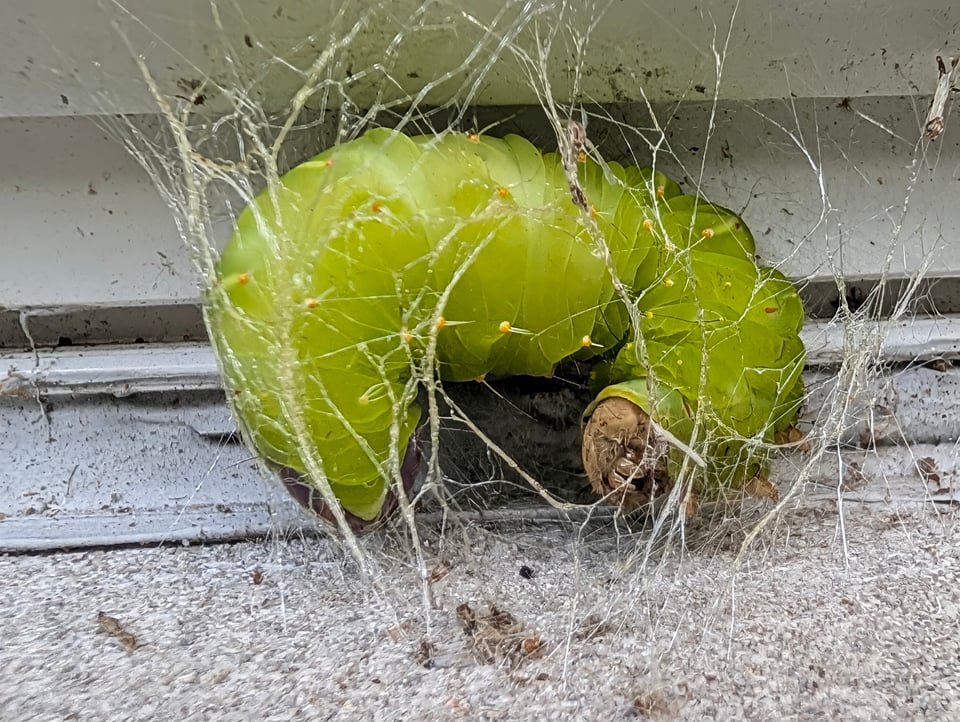
The life of a silk moth is all about extremes. Over about 50 days, this caterpillar eats up to 86,000 times its starting weight in leaves from local oak, birch, and maple trees. It has to eat this much to build up the fat it needs to survive. Once it becomes an adult moth, its mouth does not work, so it can never eat again.
After it finishes feeding, the caterpillar empties its stomach and spins a tough, weatherproof cocoon. It uses liquid silk made of strong proteins held together by a natural glue. Inside this shell, the insect stops growing and makes its own natural antifreeze, called glycerol. This stops ice crystals from destroying its cells, letting it survive Northwoods winters that drop well below negative 20 degrees Celsius.
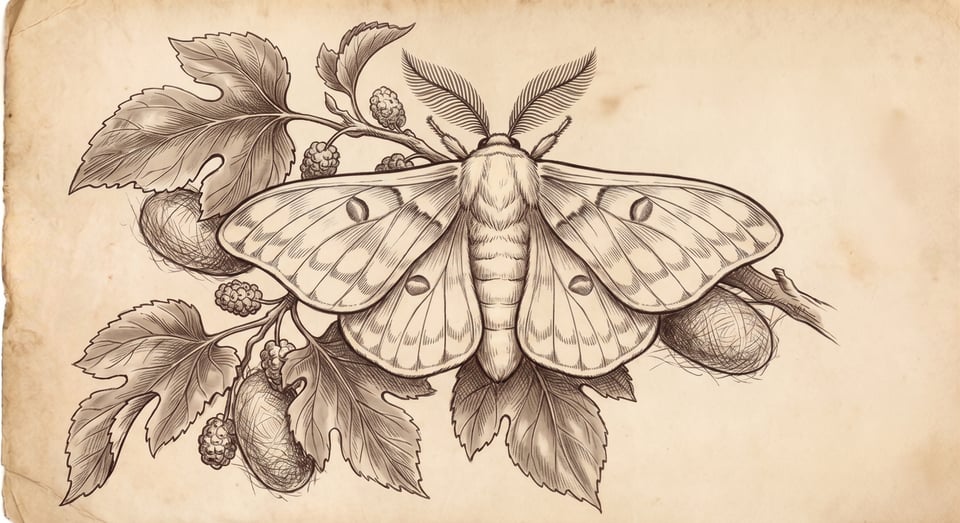
In late spring, the insect makes a special liquid to melt the silk so it can push its way out. The adult moth is huge, with a wingspan of 10 to 15 centimeters. It has large, clear spots on its wings that look like eyes to scare away predators like birds. Because it cannot eat, the adult only lives for a few days to two weeks. Its only goal is to find a mate. Males have large, feathery antennae that can smell a female up to 4.5 kilometers away.
Problems in the Forest
Even with these amazing skills, giant silk moths face big challenges in our woods.
One major threat was actually caused by people. In 1906, scientists brought a European parasitic fly to America to control invasive Spongy moths. But this fly breeds several times a summer and needs a host late in the season when the Spongy moths are already gone. Because of this, it attacks native silk moths instead. Studies show this fly kills up to 81 percent of native caterpillars.
Modern timber management also causes problems. To stop Spongy moth outbreaks, the state uses airplanes to spray a chemical called Btk over the trees. This spray protects the timber, but it also kills native caterpillars that are feeding early in the summer. Forestry workers struggle to balance protecting trees with saving native insects.
Even a simple porch light causes trouble. As more houses and businesses are built, bright outdoor lights confuse the moths and mess up their flight paths.
How to Help in Your Yard
We can easily help these beautiful insects survive right on our own properties.
Leave the Leaves: In the woods, cocoons fall with the autumn leaves and stay warm under the winter snow. Heavy raking and leaf shredders destroy this safe layer and can crush the insects inside. Leaving natural leaf patches or building damp, cool microclimates around garden beds using rocks and logs gives them excellent ground shelter.
Dim the Lights: Turning off extra yard and porch lights from May to July makes a huge difference. It helps these night flyers navigate the dark and easily track down mates.
Let Cocoons Be: If a caterpillar spins its cocoon directly on your house siding or trim, just leave it alone. Letting it sit safely through the winter means the moth will hatch naturally in the spring.
You just read issue #111 of Northwoods Ledger. You can also browse the full archives of this newsletter.