
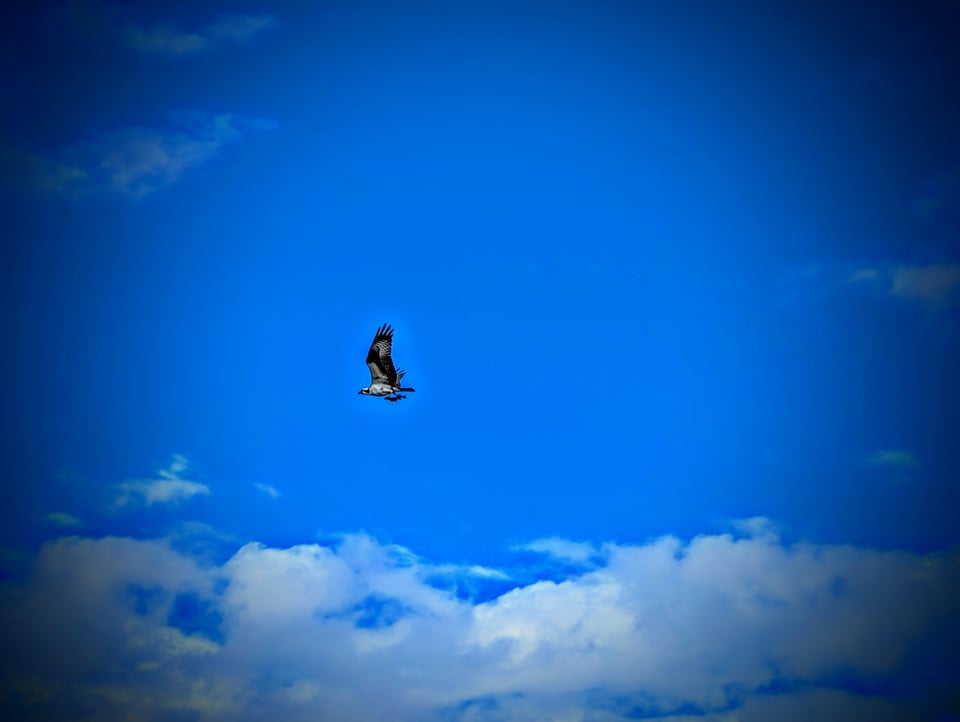
Most birds of prey eat whatever they can find, but the osprey is a rare exception. It is nature's ultimate fishing machine, built for a single task: hunting live fish underwater.
Hovering fifty to eighty feet above the surface, it locks onto a moving target, compensates for light bending through the water, and folds its wings into a sharp "M." It punches feet-first through the surface at over forty miles per hour, often plunging up to three feet deep to strike.
Surviving this crash requires incredible adaptations. Upon impact, muscular slits seal its nostrils shut while a clear inner eyelid slides across its eyes, shielding them from churning sand and silt.
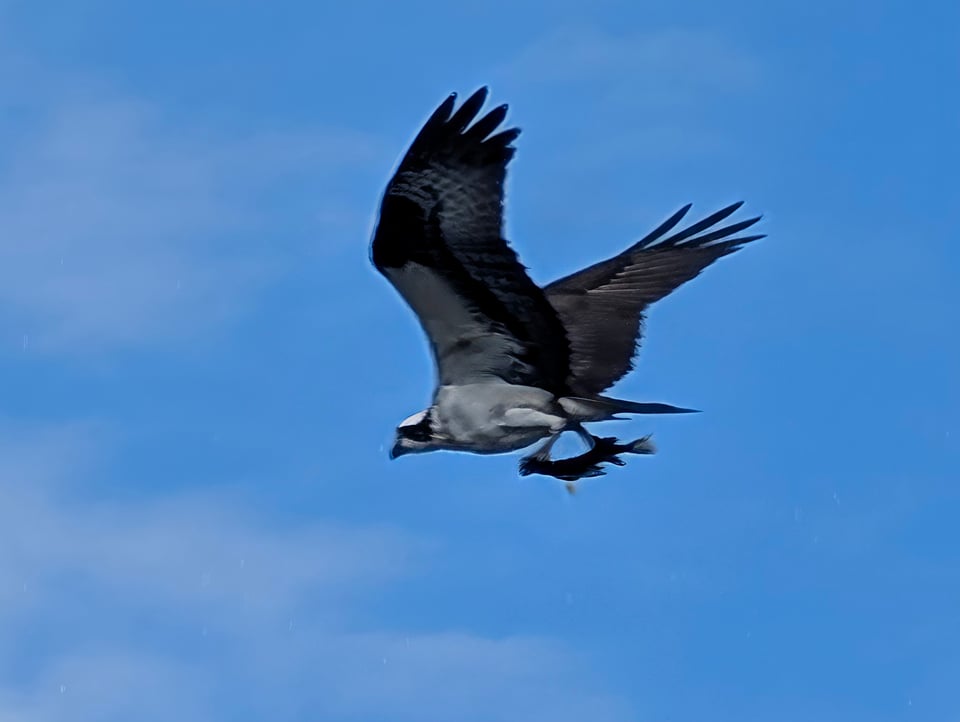
Once underwater, specialized feet lock down thrashing prey. Unlike hawks and eagles with three front toes and one fixed back toe, the osprey can swing its double-jointed outer toe backward to form a balanced two-by-two clamp. Rigid, sandpaper-like spikes on the bottom of its feet bite through protective fish slime, preventing a walleye or northern pike from slipping away.
Bursting back through the surface, the bird uses its talons to twist the fish head-first into the wind. Carrying the fish forward cuts wind resistance in half, saving vital energy as it hauls its heavy meal, usually to a dead white pine.
As August turns to September across the Northwoods of Wisconsin, these birds must pack on thick fat reserves before beginning a solo, four-thousand-mile migration to South America as the lakes begin to cool.
You just read issue #109 of Northwoods Ledger. You can also browse the full archives of this newsletter.