We believe that informed voters are the only defense against fiscal mismanagement and the erosion of local resources. If you are a paid subscriber, thank you for making this investigative work possible.
Oneida County recently hired The SpyGlass Group to audit its telecommunications budget. The audit revealed severe administrative failures. The county squandered tens of thousands of dollars simply because internal staff failed to verify their own vendor invoices. This local technology bloat is not just an IT problem. It signals a larger, systemic crisis in taxpayer stewardship.
We believe that informed voters are the only defense against fiscal mismanagement and the erosion of local resources. If you are a paid subscriber, thank you for making this investigative work possible.
On March 11, Oneida County set a strict limit on its spending to address a vendor's refusal to connect municipal buildings to the new fiber network. Despite laying 225 miles of fiber optic cable in Rhinelander, the project stalled at the finish line. Multi million dollar fiber lines currently sit dormant yards from nine critical municipal buildings because the vendor, Bug Tussel, considers the final hookups an extra cost.
We believe that informed voters are the only defense against fiscal mismanagement and the erosion of local resources. If you are a paid subscriber, thank you for making this work possible.
LAND O’ LAKES – A 191 acre land purchase in Vilas County joins two separate blocks of public forest. The Northwoods Alliance and Partners in Forestry bought the parcel last month to create an unbroken stretch of woods covering over 1,200 acres.
We believe that informed voters are the only defense against fiscal mismanagement and the erosion of local resources. If you are a paid subscriber, thank you for making this investigative work possible.
We believe that informed voters are the only defense against fiscal mismanagement and the erosion of local resources. If you are a paid subscriber, thank you for making this investigative work possible.
This month, the April edition of The Northwoods Ledger shifts focus to the seasonal transition. Snowbanks recede, ice melts from lakes, and the woods begin to hum with life. We highlight the markers of this shift. Robins appear, black bears emerge from dens, and maple trees offer their last drops of sap.
The April edition contains the following reports:
Northwoods Wilds: We detail how the wood frog survives the winter by freezing into a solid block of ice. The frog floods its bloodstream with glucose and urea to create a biological antifreeze that protects its vital organs.
Northwoods Curiosities: We explain the biological trigger that causes whitetail deer to shed their thick, grey winter hair for a thin, reddish-orange summer coat.
Northwoods Traditions: We analyze the historical role of fire in the ecosystem. You will learn how controlled burns clear undergrowth, reduce catastrophic wildfire risks, and encourage fire-adapted species to grow.
Northwoods History: We document the history of logging camp marriages. Women in crowded cities signed contracts and boarded trains to marry men working in the isolated timber cuts.
Seasonal Food: We include a recipe for maple-glazed smoked fish. This dish bridges the end of ice fishing and the peak of maple syrup season.
If you know someone who would appreciate what we do, please give us a mention. Word of mouth still carries value around here.
Consider upgrading to a Steward Membership. For just the price of a coffee you can receive the full color PDF edition of the Ledger every month. You can also find us at your favorite local bait shop, gas station, and local library.
Oneida, Vilas, and Lincoln counties face a combined $11 million in projected deficits and new debt. These figures do not appear by accident. They are the direct result of votes cast in committee rooms and line items hidden in 300-page budget spreadsheets. The Northwoods Ledger provides this report to clarify the high-stakes decisions facing our communities.
We believe that informed voters are the only defense against fiscal mismanagement and the erosion of local resources. If you are a paid subscriber, thank you for making this investigative work possible.
Subterranean Mechanics
Northwoods roads sit on a geological sponge. Clean gravel drains water away from the surface, but native silts and clays act as capillary pumps that draw groundwater upward. When winter arrives, plunging temperatures penetrate the roadbed and freeze the moisture in the upper layers of soil. Because the native silt continues to pump water upward, this freezing water does not disperse evenly. It accumulates into a solid, growing slab of ice called an ice lens. Water expands by roughly 9 percent when it freezes. As the ice lens thickens, it exerts massive upward hydraulic pressure that easily exceeds the sheer weight of the roadbed above it.
We believe that informed voters are the only defense against fiscal mismanagement and the erosion of local resources. If you are a paid subscriber, thank you for making this work possible.
The campaign to rewrite Oneida County zoning laws did not start with a public referendum. It began inside a county committee room with a 31-page draft proposing sweeping revisions to local land-use regulations. While the document appeared at a local level, its authors represented out-of-state interests rather than county planners.
This sudden focus on Northwoods municipal code followed a specific event. In 2021, conservationists secured a permanent easement for the 70,000-acre Pelican River Forest. The project guaranteed public access and sustainable timber harvests, but it also triggered a reaction from groups wary of government-funded land protections. These organizations categorized the easement as a loss of local jurisdiction and attempted to utilize the county's zoning authority to create a new layer of oversight for future conservation projects.
The American Stewards of Liberty (ASL) led this effort. Based in Texas, ASL defines itself as a property rights advocacy group. Their primary strategy involves a legal theory called "coordination."
The growing season in Oneida, Vilas, and Lincoln Counties is a narrow window defined by erratic spring frosts. Store bought plants frequently lack the resilience to survive sudden temperature drops in May. Winter sowing provides an inexpensive and effective solution. By starting seeds outdoors in late March, plants adapt to weather patterns as they germinate, resulting in deeper root systems and higher survival rates than purchased annuals.
The Milk jug Method
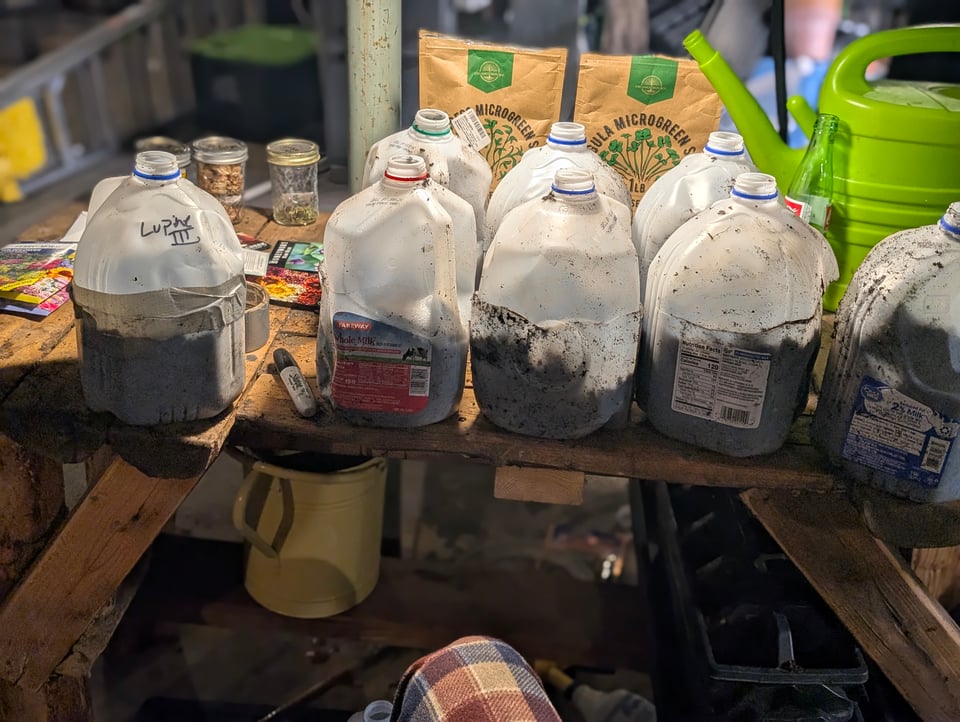
One gallon jugs function as individual cold frames to create sheltered micro-climates. These containers protect soil from dry winds while allowing solar heat to warm the interior.
Container Setup: Select clean jugs. Cut each container horizontally, leaving a small section near the handle to serve as a hinge.
Drainage and Ventilation: Puncture at least six holes in the base to prevent water from pooling during the April melt. Remove and discard the cap. The open top allows snow and rain to enter while preventing heat from building to dangerous levels during sunny afternoons.
Soil Requirements: Use three inches of pre-moistened potting mix. Garden soil compacts during the freeze-thaw cycle, which can crush emerging roots.
Sowing Windows and Technical Specifications
Swamp Milkweed, Joe Pye Weed, Bee Balm
March 31
Surface
High (Light-Dependent)
Wild Lupine, Butterfly Weed, Ironweed
March 31
1/2 Inch
Low (Darkness-Required)
Calendula, Bachelor's Buttons, Snapdragons
April 7
Surface
High (Light-Dependent)
Violas, Pansies, Gaillardia
April 7
1/8 Inch
Low (Light-Neutral)
Kale, Spinach, Beets
April 15
1/2 Inch
Low (Darkness-Required)
Warm-Weather Crops: This system is not effective for heat-loving plants like tomatoes or peppers. These species lack the biological defenses to survive sub-freezing night temperatures and require consistent indoor heat until the soil reaches 60 degrees in June.
Planting and Preparation
Surface Sowing: Press seeds that require light into the surface of the damp mix. Do not cover these with soil, as darkness will inhibit germination.
Depth Sowing: For seeds requiring cover, maintain a consistent depth (typically 1/2 inch) to ensure moisture contact during the freeze-thaw cycle.
Seed Pre-Soak: For varieties with hard coats, such as Wild Lupine, soak the seeds in room-temperature water for 24 hours. Drain them completely before sowing to prevent the introduction of mold or pathogens.
Local Resources for Seed and Help
Northwoods residents can access regional seed stock and expert advice through the following places.
Rhinelander District Library Seed Library: The 2026 Seed Library is active from March 16 through May 30. Free, open-pollinated seeds curated for the Oneida County climate.
On March 12, 2026, the Oneida County Public Works Committee passed Resolution #25-2026 to formally protest the state transportation funding formula. This action is not an isolated local complaint. It represents the local execution of a coordinated, statewide offensive engineered by the Wisconsin Counties Association (WCA). In January 2026, the WCA issued a formal call to action directing all 72 Wisconsin counties to pass identical sustainable transportation resolutions by the end of April. This unified push presents Madison lawmakers with a single, undeniable data point. The municipal funding model is failing everywhere.
The state uses General Transportation Aids to cover a specific percentage of county highway maintenance. However, lawmakers in Madison consistently cap this fund to balance the broader state budget. State leaders routinely approve significantly less money than their own formula dictates. By artificially limiting these payouts, the state intentionally shifts the financial burden downward. This engineered shortfall forces Oneida County, and every other county in the WCA coalition, to cover the difference. The result is a massive local deficit.
At the same time, state law traps Wisconsin counties under a hard cap on property taxes. Oneida County cannot simply raise taxes to pay for more expensive road repairs without asking voters for permission through a referendum.
The Wisconsin Conservation Congress (WCC) operates as the statutory bridge between citizen input and the Natural Resources Board (NRB). The 2026 Spring Hearing arrives as state conservation mandates collide with local infrastructure contraction. This process determines the boundary between administrative rulemaking and municipal land-use authority in the Northern Highland-American Legion (NHAL) State Forest.
The Voting Process Participation follows a dual track. On April 13, residents meet in person at designated county locations to elect delegates. Simultaneously, a digital voting window opens at dnr.wisconsin.gov and remains active through April 15. These data points provide the official record that the NRB must consult when drafting rules for the region.
Ballot Focus: The Knowles-Nelson Fiscal Cliff The Question: Should the legislature reauthorize the Knowles-Nelson Stewardship Program for at least 10 years with a funding commitment of up to $1 billion?
Series Note: This report is Part 2 of an ongoing look into Oneida County financial oversight. To see the raw data and the original documents that launched this inquiry, read Part 1: 22 Checks, Zero Votes in the Ledger Archive.
The Digital Bypass: How Oneida County Disabled its own Financial Guardrails
Oneida County recently completed a $1.2 million transition to the ‘Civic Systems’ accounting software platform. The software was marketed as a digital watchdog, designed to protect the public treasury by "locking" funds once a contract limit is reached. However, an investigation by The Northwoods Ledger has confirmed that for a high-profile legal contract, these digital guardrails were never applied.
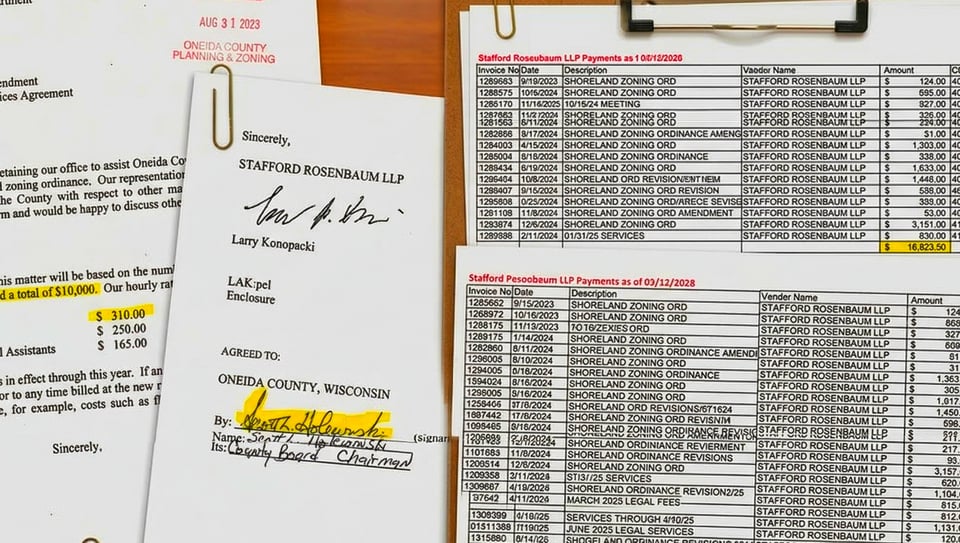
The breakdown allowed the Planning and Zoning Department to process $16,823.50 in payments on a contract that the County Board had voted on at $10,000.
A signature on a county contract is the final word on spending authority. When Oneida County Board Chairman Scott Holewinski signed the agreement to hire Madison attorneys in August 2023, he established a clear legal boundary. The project to rewrite the shoreline rules was capped at exactly $10,000. Financial records obtained by the Northwoods Ledger confirm that boundary has been ignored, leaving taxpayers with a bill that the Board never publicly authorized.
The Vanishing Cap
The August 2023 agreement with Stafford Rosenbaum LLP was not a rough estimate. It was a binding contract focused on revisions to the Oneida County shoreland zoning ordinance. Under the Fees and Charges section, the document is unambiguous, stating that total payment for the matter would "not to exceed a total of $10,000."
For decades, the standard response to declining populations was to increase stocking volume. In Oneida County, the math no longer balances. We are missing "eaters" today because the baby fish from three years ago never survived their first winter.
A regulatory double standard currently defines the Stacks Bay expansion project in Woodruff. If a private property owner clears shoreland without a permit, local authorities issue a stop-work order and levy daily fines. When the State of Wisconsin does it, state agencies claim sovereign immunity.
Stacks Bay Clearing
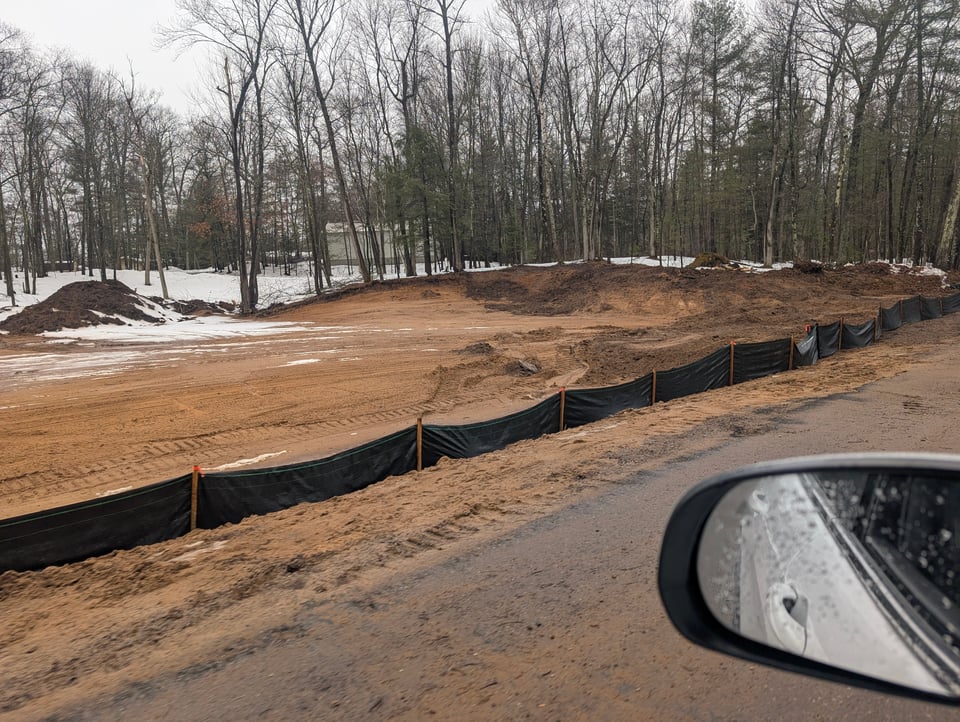
In this instance, the Department of Administration and the Department of Natural Resources bypassed local oversight entirely. On January 13, 2026, Oneida County zoning staff documented a site where state contractors had cleared approximately 100 trees and stripped the organic layer from 27,500 square feet of earth. This unauthorized excavation sits entirely open, with raw sediment left fully exposed to the elements less than 100 feet from the ordinary high water mark of Lake Minocqua.
The Stalemate at the Water’s Edge Before the ice fully melts and the docks go back in, the fight for the future of the Oneida County shoreline has hit a tactical stalemate. As of early March, proposed amendments to the Zoning and Shoreland Protection Ordinance are stalled in the boardroom. These are not minor updates. These changes will dictate exactly what you can do with your waterfront property and will permanently impact local water quality. Every riparian owner needs to understand why the county is holding its ground against conservation advocates before these rules are finalized.
The "Landscaping" Loophole The debate centers on the 35-foot vegetative buffer zone directly adjacent to the water. Historically, this strip of land was strictly protected to prevent erosion and filter runoff.
We believe that informed voters are the only defense against fiscal mismanagement and the erosion of local resources. If you are a paid subscriber, thank you for making this work possible.
In 2005, a resident gun deer license in Wisconsin cost $24. Today, that tag still costs exactly $24.
The money you pay for that tag, along with every fishing license and waterfowl stamp, goes directly into the state’s Fish and Wildlife Account. This account is the primary engine for Wisconsin conservation. It pays for the wardens patrolling Vilas County, the technicians stocking walleye in Lake Tomahawk, and the biologists managing our public lands.
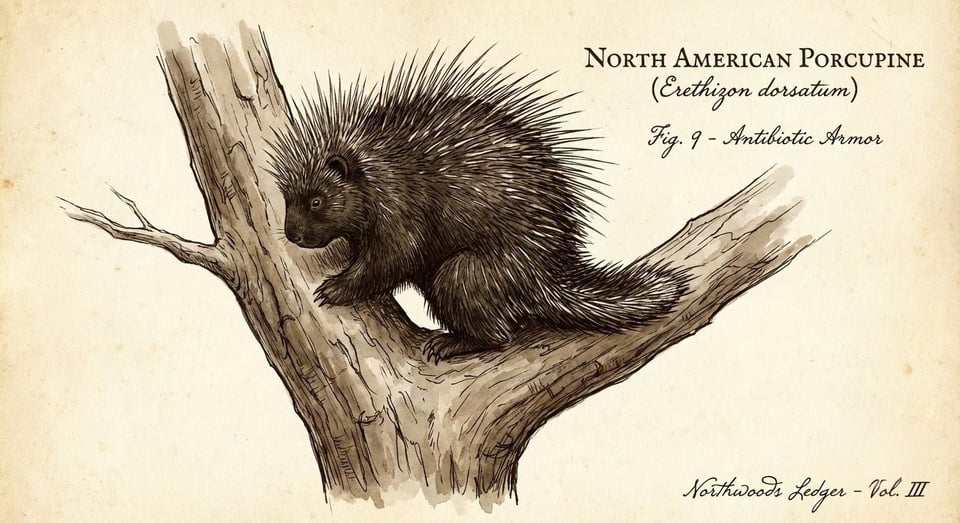
While their 30,000 quills are their most famous feature, the real story is how they survive their own clumsy nature.
The Physics of a Falling Rodent
Porcupines are heavy. A mature adult can reach 20 pounds, and they often climb to the outer, thinner branches of the canopy to reach nutrient-dense buds. This leads to a recurring biological hazard. They fall out of trees with startling frequency.
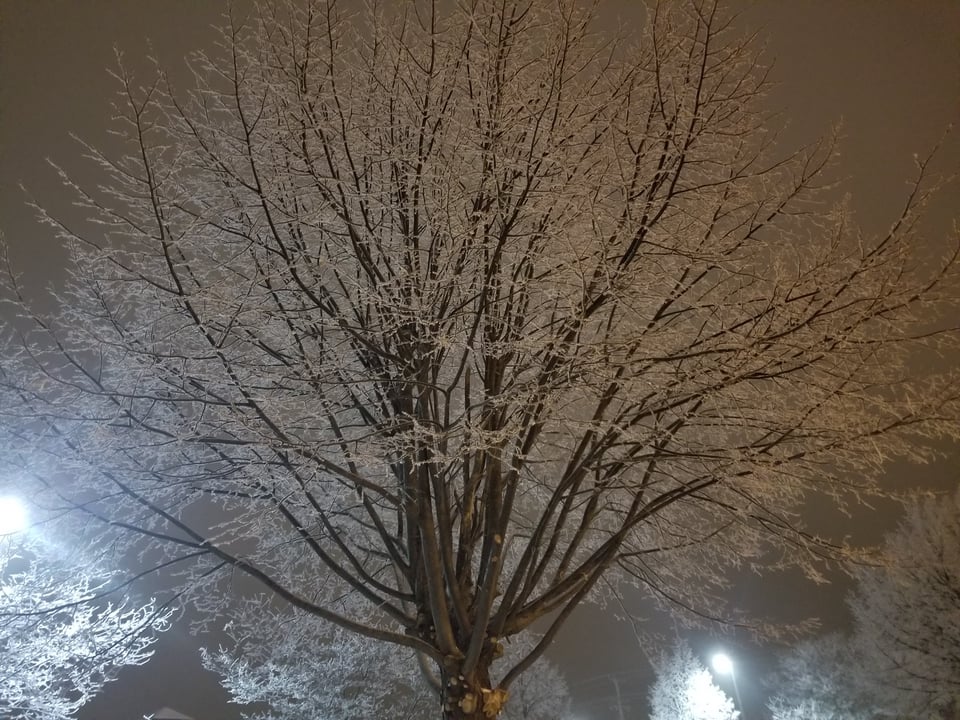
March is a month of contradictions in the Northwoods. Some days feel like deep winter, with bitter winds and heavy snow, while others bring the first hints of spring. Winter's grip is loosening, but it will not let go without a fight. Ice fishing, snowmobiling, and skiing remain in full swing.
In this month's edition of the Northwoods Ledger, we track the physical and historical shifts happening across our timber and lakes right now.
Inside the March Edition:
The Railroad That Opened the Northwoods: Before highways and snowmobiles, the Northwoods was nearly inaccessible for much of the year. That changed in the late 1800s when railroads pushed north, driven by the logging industry. Many of today's snowmobile and hiking trails follow the exact paths of these long-abandoned tracks.
The Physics of Blue Snow: In late winter, snowbanks piled up by plows often take on a blue tint. As snow becomes compacted, the air is squeezed out, allowing longer wavelengths of light to be absorbed while shorter wavelengths like blue are reflected back. You are looking at the exact same physics that give glaciers their striking color.
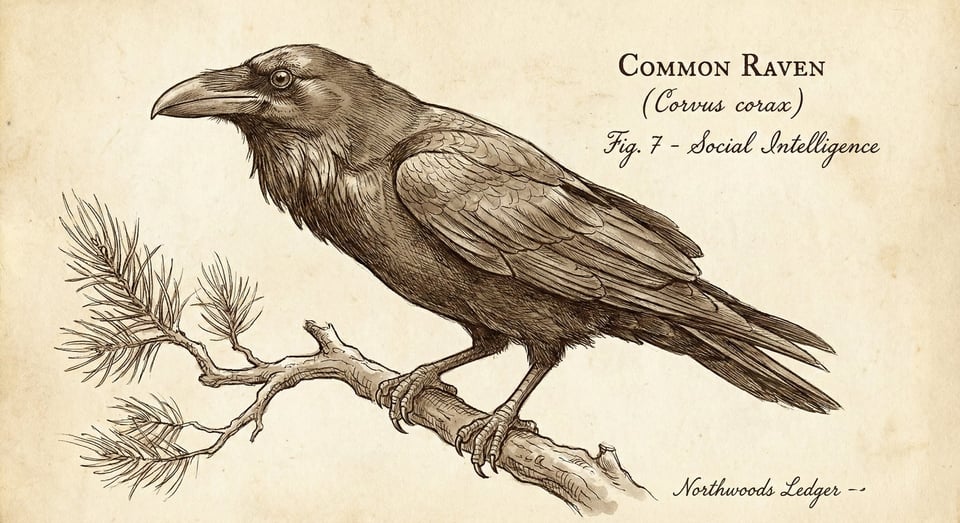
The Nesting of the Ravens: Ravens are highly intelligent and begin their nesting season in March, long before most birds have returned. They construct large stick nests in towering pines and hatch their young while winter still lingers to take advantage of scavenging opportunities.
The First Harvest: March is tapping season, the time when sugar maple trees give up their first sap of the year. To mark the occasion, we included a recipe for Maple Glazed Smoked Fish. It is a dish that brings together maple syrup season and late-season ice fishing perfectly.
Compiling these regional histories, recipes, and ecological deep dives takes a significant amount of time. If you value lasting Northwoods knowledge, consider upgrading to a paid membership. Paid members receive the fully compacted, printable PDF edition of the Northwoods Ledger delivered straight to their inbox every month as well as an complete indexed archive of every article we’ve written to date.