
A three-part series by The Northwoods Ledger
Read Part 1 Here Read Part 2 Here
Part 3: The Invisible Hand on the Throttle
Water levels on the 28 connected lakes are not set by weather alone, nor are they controlled by local town hall decisions. Water depth and flow across the system are managed by century-old state charters, hydroelectric dams, and private utility companies.
When high water floods docks in spring or late-summer dry spells leave boat lifts sitting in mud, residents often contact local town supervisors. However, town boards have no legal authority over lake levels.
Water Control on the Chain
The 28 lakes are divided into two distinct managed bodies of water separated by the Burnt Rollways Dam, located between the Three Lakes chain and the Eagle River chain.
Burnt Rollways Dam controls water flow between the upper and lower lakes. It is operated by the Wisconsin Valley Improvement Company (WVIC), a private corporation chartered by the state legislature in 1907 under Wisconsin Statute Section 182.70.
WVIC operates a network of 21 storage reservoirs across northern Wisconsin to regulate the flow of the Wisconsin River. Under state statute, WVIC's mandate is to maintain uniform river flow for downstream hydroelectric plants and industrial paper mills, while managing regional flood control. Their mandate does not prioritize local recreational boating levels.
This mandate creates ongoing operational friction:
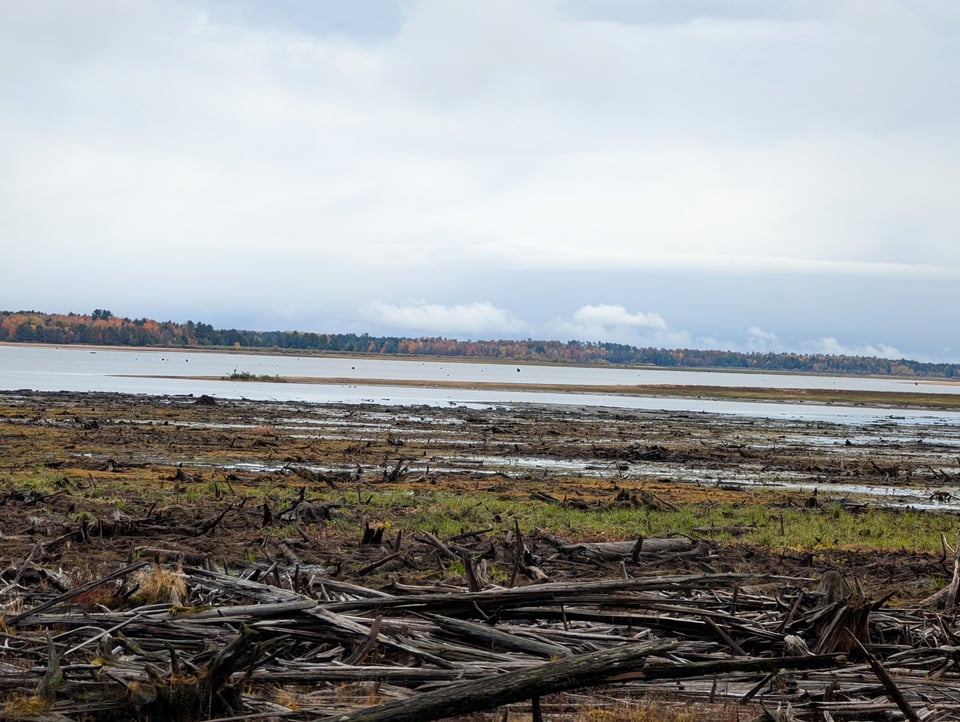
During dry summers, WVIC is legally required to pull stop-logs at Burnt Rollways to release water from the Three Lakes chain into the Wisconsin River system. This lowers lake levels, exposes shallow reefs, and creates navigation hazards for local boaters.
During heavy spring snowmelts, WVIC holds water back to prevent downstream flooding, which can raise local water levels, flood septic systems, and erode shorelines.
Public Resource: Waterfront property owners can track active dam adjustments, discharge flow rates, and lake level gage readings directly through the Wisconsin Valley Improvement Company's public hydrologic database at wvic.com.
Hydroelectric Operations at Otter Rapids
At the lower end of the Eagle River chain sits the Otter Rapids Dam, operated by Wisconsin Public Service (WPS).
Otter Rapids is a hydroelectric facility generating power for the regional electrical grid. WPS operates the dam under Federal Energy Regulatory Commission (FERC) License P-1957.
This federal license specifies minimum and maximum water levels that WPS must maintain in the lower chain while operating its power turbines. Ultimate control over water discharge at Otter Rapids rests with federal energy regulators and utility engineers, not county or town officials.
(We believe that informed voters are the only defense against fiscal mismanagement and the erosion of local resources. If you are a paid subscriber, thank you for making this work possible.)
A System Managed Outside Town Limits
Local town boards and county officials handle resident complaints and maintain public boat landings, but their hands are tied by state law, federal rules, and utility charters. The limits are built directly into the system:
Invasive Weeds: General town boards cannot simply raise property taxes to pay a sudden $50,000 weed harvesting bill because state law caps municipal tax levies at net new construction (§ 66.0602). Townships rely heavily on volunteer lake associations meeting strict DNR grant deadlines that are backed by state motorboat gas tax funds.
Boat Traffic: Town boards face strict limits under Wisconsin Statute Section 30.77 when trying to regulate modern wake craft. Because state lawmakers in Madison failed to pass statewide wake rules, local ordinances face immediate legal challenges, leaving enforcement to underfunded county water patrols that receive prorated state aid.
Water Levels: Town halls have zero legal control over physical water depth. Lake levels are governed by a state-chartered reservoir company that manages river flows for downstream industry and a private utility operating under a federal power license.
Local officials are left to manage the local side effects, but the authority to fix the root causes rests far beyond town hall doors.

You just read issue #105 of Northwoods Ledger. You can also browse the full archives of this newsletter.