
When the Lincoln County Land Services Committee approved Conditional Use Permit CUP-96-1075 in mid-2023, they gave Milestone Materials the green light to operate an 80-acre sand and gravel pit off County Road S. That vote triggered a multi-year legal fight in the Town of Skanawan.
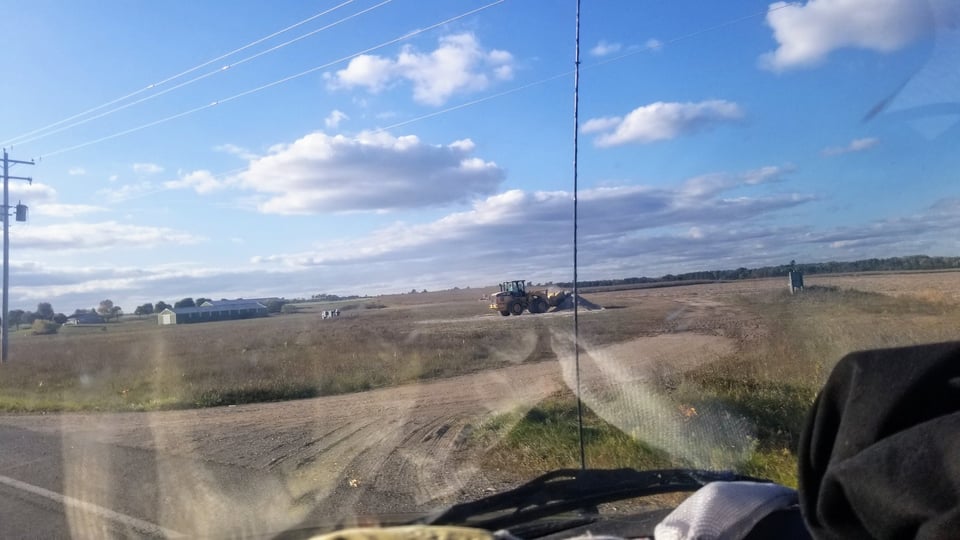
The decision gave the 36-square-mile rural township its third active heavy extraction site. More importantly, it exposed the legal reality small towns face across Oneida, Vilas, and Lincoln counties under Wisconsin's modern zoning laws.
What started as an advisory vote against the pit by the Skanawan Town Board escalated quickly. It moved from administrative appeals to a circuit court lawsuit (Case No. 23CV146), culminating in a court-ordered hearing before the Lincoln County Board of Adjustment in December 2024.
Now that the legal challenges have concluded and pit operations are active, the Skanawan case provides a clear, practical lesson for rural taxpayers: how Act 67 works, why simply voting "no" usually fails, and why missing the window to set strict permit conditions leaves towns with few options.
The Trap of Advisory Votes
Before county officials approved the permit, the Skanawan Town Board voted to recommend a denial. However, under Lincoln County's zoning structure, township recommendations on conditional use permits are strictly advisory. The binding legal authority rested entirely with the five-member Land Services Committee in Merrill.
As Skanawan Town Supervisor Walter Horabik noted early in the process, rural towns face a major financial disadvantage when contesting county zoning decisions. A few months of litigation can wipe out a large portion of a small town's annual operating budget. For local taxpayers, fighting county zoning decisions in circuit court is a steep financial gamble.
The Standard of Wisconsin Act 67
Under 2017 Wisconsin Act 67 (Wis. Stat. § 59.69(5e)), county zoning boards must follow a rigid legal rule known as the "substantial evidence" standard:
Mandatory Approval: If an applicant submits technical data, engineering plans, and environmental reports showing the pit meets existing county standards, the county is legally required to issue the permit.
Facts Over Speculation: Public concerns about noise, lowered property values, or truck traffic are classified under state law as "speculation" unless backed by hard data. To challenge an application legally, citizens cannot rely on personal testimony alone; they must provide concrete technical evidence.
Taxpayer Risk: If a county board denies a permit based only on public opposition, the developer can sue. Without substantial technical evidence justifying the denial, the county risks losing in court, leaving taxpayers responsible for legal fees while the permit is issued anyway.
The Legal Path to Circuit Court
Local property owners organized as the Skanawan Property Owners Association, U.A. (SPOA). Pooling private funds, the group filed an administrative challenge under Lincoln County Zoning Ordinance Section 17.8.12(2)(b), alleging procedural and evidentiary errors by the Land Services Committee.
When administrative appeals failed to overturn the permit, SPOA took the fight to state court, filing a lawsuit in Lincoln County Circuit Court (Case No. 23CV146).
In August 2024, the Circuit Court sent the case back to the county. The judge instructed the Lincoln County Board of Adjustment to conduct a formal review of five specific procedural and legal issues surrounding the initial approval.
The Board of Adjustment held a public hearing in December 2024 to deliberate on those court-ordered points. While the review forced county officials to re-examine the public record, the core rule of Act 67 remained: without competing technical studies proving direct harm, the underlying permit stood firm.
(We believe that informed voters are the only defense against fiscal mismanagement and the erosion of local resources. If you are a paid subscriber, thank you for making this work possible.)
Economic Realities and Infrastructure Costs
The Skanawan case highlighted the economic trade-offs of rural gravel extraction:
County Material Costs: Sand and gravel are essential for regional road maintenance and construction. Because hauling costs increase with distance, local pits keep public paving projects affordable on paper for county highway departments.
Township Road Damage: Fully loaded gravel trucks can weigh up to 80,000 pounds. When heavy commercial hauling accelerates wear on local, unbonded town roads, the long-term repair burden shifts directly onto local township property taxes.
Property Tax Shifts: If industrial noise, dust, and heavy traffic reduce nearby residential property values, affected assessments may drop, shifting a larger share of the local tax burden onto remaining landowners.
The Playbook for Tri-County Residents
Under Wisconsin Act 67, once a conditional use permit is granted, the county cannot retroactively add new operational conditions. Because Skanawan residents focused their early efforts on pushing for a full permit denial rather than demanding strict conditions, the window to restrict operating hours, set lower decibel limits, or mandate well-testing passed once CUP-96-1075 was finalized.
For residents across Oneida, Vilas, and Lincoln counties facing future proposals, the Skanawan case offers a clear tactical strategy before and after a vote:
Before the Vote: Shift Strategy from "Denial" to "Enforceable Conditions"
Trying to block a permit completely without independent engineering data almost always fails under Act 67. The most effective strategy is to force county boards to attach 15 to 20 precise, measurable operational conditions before the final vote. To pass legal scrutiny, citizens must place documented facts into the official record:
Operating Hours & Traffic: Submit work schedules and school bus routes to justify capping haul hours (e.g., 7:00 AM to 5:00 PM, Monday through Friday, with no weekend operations).
Noise & Air Quality: Provide baseline ambient sound readings taken with calibrated meters to demand boundary noise caps (e.g., 65 dBA max), paved entrance aprons, and mandatory dust suppression.
Water & Infrastructure Safeguards: Collect historic DNR well logs to require operator-funded baseline testing of adjacent drinking wells, and mandate signed haul route agreements with financial road bonds before site prep begins.
After Approval: Strict Code Enforcement
Because new rules cannot be added after approval, Skanawan residents are left with one primary weapon: rigorous enforcement of the conditions already on the books. A conditional use permit remains valid only as long as the operator complies with every listed requirement.
By maintaining standardized logs, tracking haul times, recording dust crossings, and capturing video evidence of violations, citizens create the formal paper trail necessary to compel county zoning administrators to enforce compliance, issue stop work orders, or initiate permit revocation proceedings.
Looking Ahead
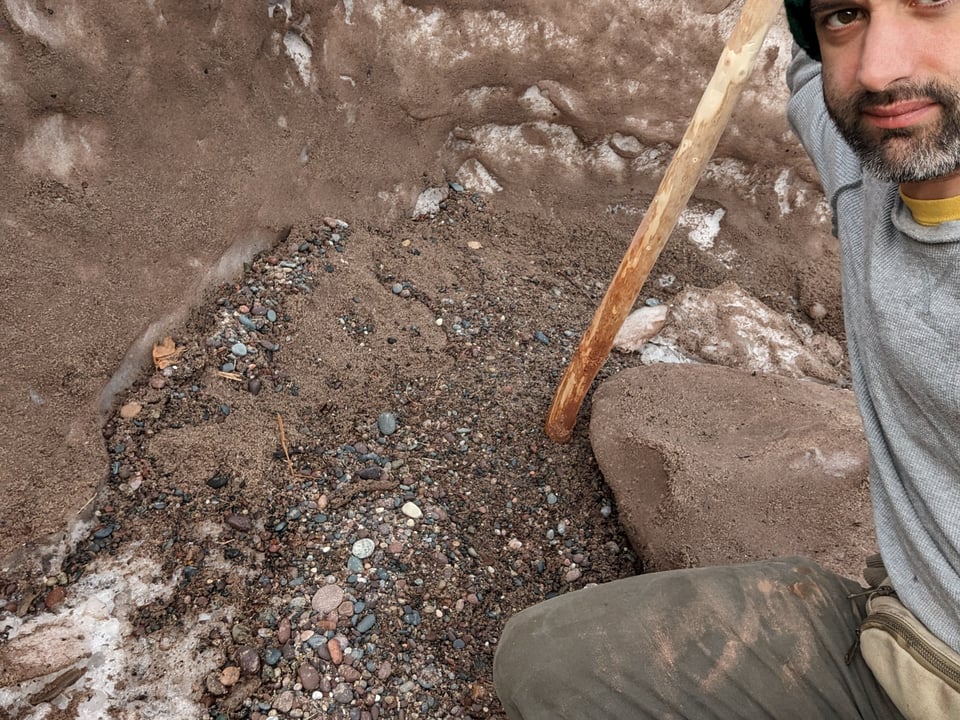
Skanawan’s legal battle serves as a study in modern land-use regulation. Under Act 67, the long term impact of a heavy extraction site is not decided by emotional town hall votes. Instead, protection comes down to the measurable, factual conditions placed on the record before the vote and the community's willingness to hold operators accountable to those rules every day.
You just read issue #100 of Northwoods Ledger. You can also browse the full archives of this newsletter.