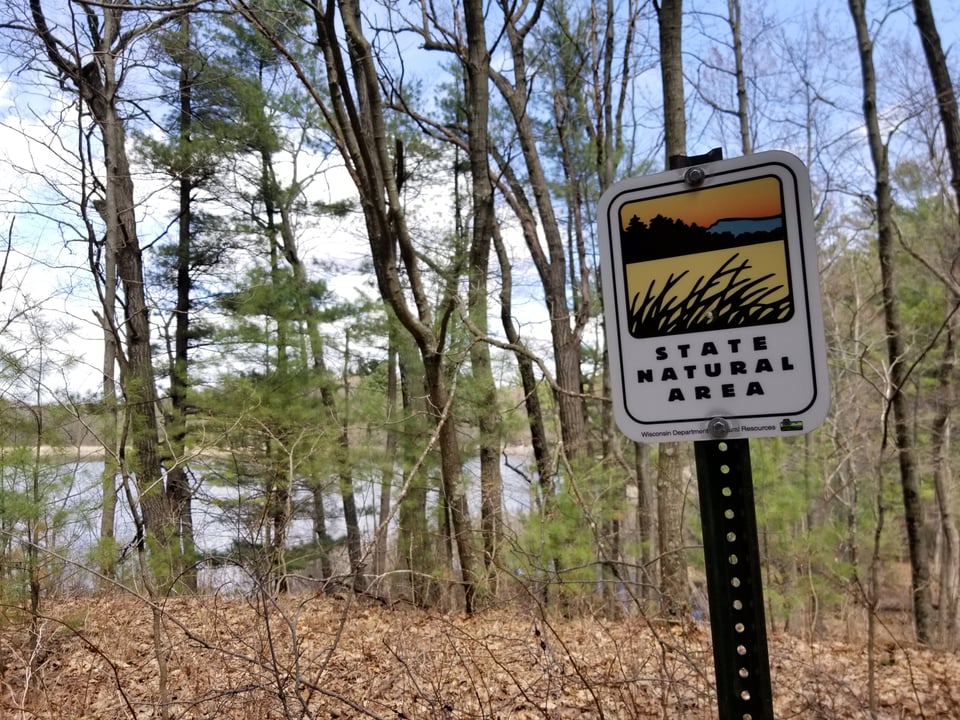
On June 30, 2026, Wisconsin's biggest conservation fund expired. This fund, called the Warren Knowles-Gaylord Nelson Stewardship Program, provided matching money for local trail, park, and land projects in Oneida, Vilas, and Lincoln counties.
In November 2025, lawmakers were looking at a compromise bill to keep the stewardship program running for ten more years. The bill had rules to increase control over state land purchases. It also set aside money for public trail systems and county park maintenance.
During a committee review of the bill, local Northwoods Representatives Rob Swearingen and Calvin Callahan both voted 'no.' This caused a 6-to-6 tie. This tie vote was a critical blow. Because the committee deadlocked, the bill lost its momentum and moved to the full Assembly without the committee's support or recommendation to pass it.
Representative Callahan did not respond to written questions sent via email regarding his committee vote prior to our publication deadline.
After this tie, Assembly leaders changed their plans because of a major change in state law. State laws gave a small group of lawmakers, called the Joint Committee on Finance, the power to review any land purchase over 250,000 dollars. Under those rules, just one committee member could block a project forever. They could do this anonymously, without any public hearing or vote.
However, the Wisconsin Supreme Court restricted that power in a decision called Evers v. Marklein. The court ruled that these secret blocks violated the state constitution. The judges decided that once the full legislature votes to fund a program, a small committee cannot step in and block the governor's administration from spending that money.
Because they lost their power to block individual land deals, Assembly leaders changed their approach. Instead of trying to stop single land purchases through a committee, they changed the wording of Assembly Bill 315. They shortened the program's extension from ten years down to just two years, cut the funding, and completely banned the state from using stewardship money to buy any new land.
In an email statement to the Ledger, Swearingen defended the ban on buying land. He said the two-year pause was "an effort to refocus state priorities toward maintenance and preserving already state-acquired land." He added that checking on existing state property was "something many sporting groups enthusiastically supported, as did I."
This new, limited version of the bill passed the full Assembly on a strict party-line vote on January 22, 2026. Swearingen pointed to his "yes" vote on this final bill as proof that he supported the program. However, because the new bill attacked the main land-purchasing part of the conservation program, it was widely known that Governor Evers would veto it. The bill reached the state Senate on January 26, but Senate leaders did not schedule any hearings or votes on it before the legislative session officially ended on March 23, 2026. As a result, the bill failed, and the stewardship program expired on June 30.
(We believe that informed voters are the only defense against fiscal mismanagement and the erosion of local resources. If you are a paid subscriber, thank you for making this work possible.)
The Epicenter: The Pelican River Forest and Monico
To understand why a local tax dispute in a town of 300 people could kill a statewide conservation program, one has to look at a massive piece of land called the Pelican River Forest.
In 2021, the state of Wisconsin used the Knowles-Nelson program to help fund a conservation agreement (called an easement) on roughly 70,000 acres of remote northern forest. This agreement permanently banned developers from dividing up the land or building houses on it. Instead, the land would remain a "working forest" for logging and public recreation.
However, a massive chunk of this 70,000-acre project sits directly inside the Town of Monico in Oneida County.
Local leaders felt they were already at a breaking point with public land. Data from the Wisconsin DNR shows that District 34 (represented by Swearingen) has over 66,500 acres of protected land, and District 35 (represented by Callahan) has about 56,100 acres. In his written statement to the Ledger, Swearingen confirmed these numbers, noting that in Oneida County, "more than 30% of the land is publicly owned or under a conservation easement."
For the Town of Monico, which has just over 300 residents and a tiny yearly budget of under 250,000 dollars, the massive Pelican River Forest project felt like a threat to its survival. The town's budget includes only about 90,000 dollars to maintain all of its local roads.
"They’re wanting to take 80% of the Monico Township, 81.5% of our township that can never be developed," Monico Town Chair Robert Briggs said during a public county board meeting, protesting the project.
Chairman Briggs did not respond to questions sent via email regarding whether the town board has lobbied the state for levy limit relief, or if they continue to view blocking conservation as their only option to protect local road budgets.
The Economics of the Municipal Tax Grievance
This intense local fight in Monico is caused by the collision of three state policies: tax limits (called levy limits), the Managed Forest Law (MFL), and conservation agreements.
Under Wisconsin law towns cannot raise property taxes on homeowners by more than their yearly rate of "new building construction."
Because the Pelican River Forest land was already private timberland enrolled in the MFL program before the easement was sold, the conservation deal did not lower Monico's current tax revenue. The landowner still pays the same low property tax rate (under two dollars per acre) that they paid before.
However, because the conservation agreement permanently bans building houses or businesses on those acres, Monico’s future chance to get tax money from "new building construction" on that land is now zero. Under the state's strict tax limit system, this rule permanently freezes the town’s budget. The town board cannot raise enough money to cover the rising costs of road plowing, fuel, and emergency services because they have no new houses being built to expand their tax base.
To break this budget freeze, local officials argue that blocking the conservation program is necessary to keep the land open for future residential buildings. Oneida County Board Chair Scott Holewinski stated during a county review of the forest deal: "They're removing that potential tax base that we need. So you're going to end up paying higher taxes. Kids won't be able to buy land in Oneida County. They'll have to go live by the city."
Chairman Holewinski did not respond to requests for comment regarding his development claims, specifically in light of official state property appraisals categorizing the remote Pelican River Forest wetlands as economically unfeasible for housing and infrastructure.
These state appraisals found that the land is mostly remote wetlands. The appraisals concluded that the cost of building roads, power lines, and sewer systems across these wet areas makes building houses too expensive to be realistic.
Furthermore, state tax data shows that remote housing developments rarely make money for small towns. The cost for a town to plow roads, run school buses, and send emergency services to remote areas is usually much higher than the new tax money the town gets back.
The Real Tax Trap
The main threat to Monico’s survival is not protected forests, but the design of the state's own tax limit laws.
These limits tie a town's budget directly to real estate development. This punishes rural towns icontain state parks, forests, and trails.
To address these concerns, Swearingen pointed in his email to his vote in favor of 2023 Act 12. This was a bipartisan law that sent more state sales tax money back to local governments.
While Act 12 increased flat state funding, it did not change the strict tax limit laws that keep rural town budgets frozen. Because a town's spending power is still tied directly to "new construction" under state law, Monico still cannot raise its property tax to cover inflation when its land cannot be developed. As a result, the tax rules keeping northern town budgets frozen remain unchanged, while the state money for regional parks and trails is also cut off.
Trail Budgets and Tourism
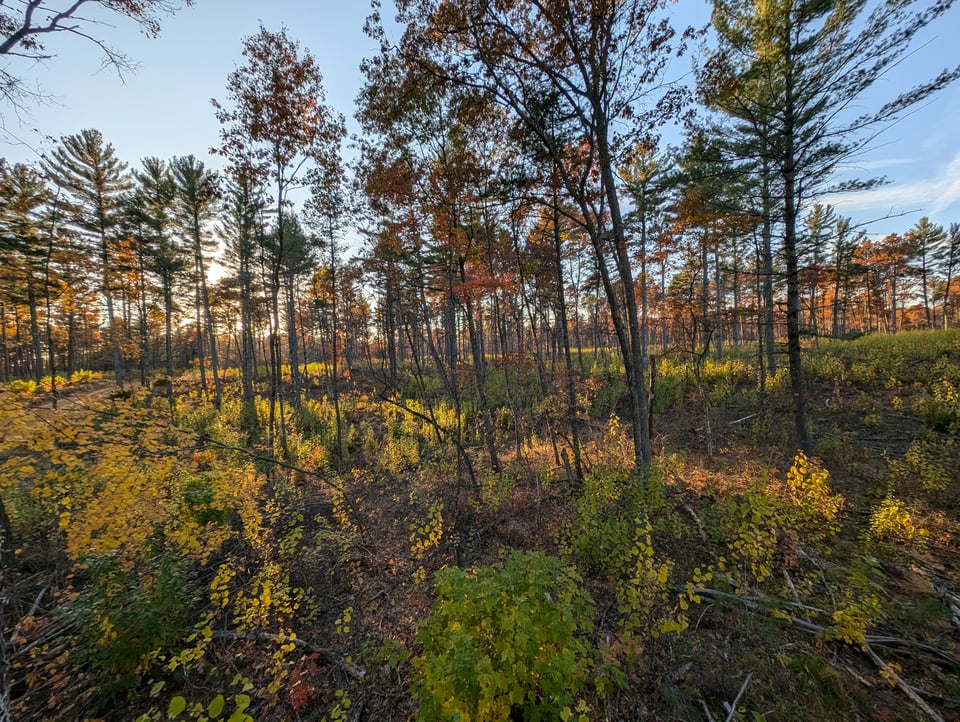
The stewardship program is also the main source of money for local park upgrades, public boat launch repairs, and trail maintenance grants across Oneida, Vilas, and Lincoln counties.
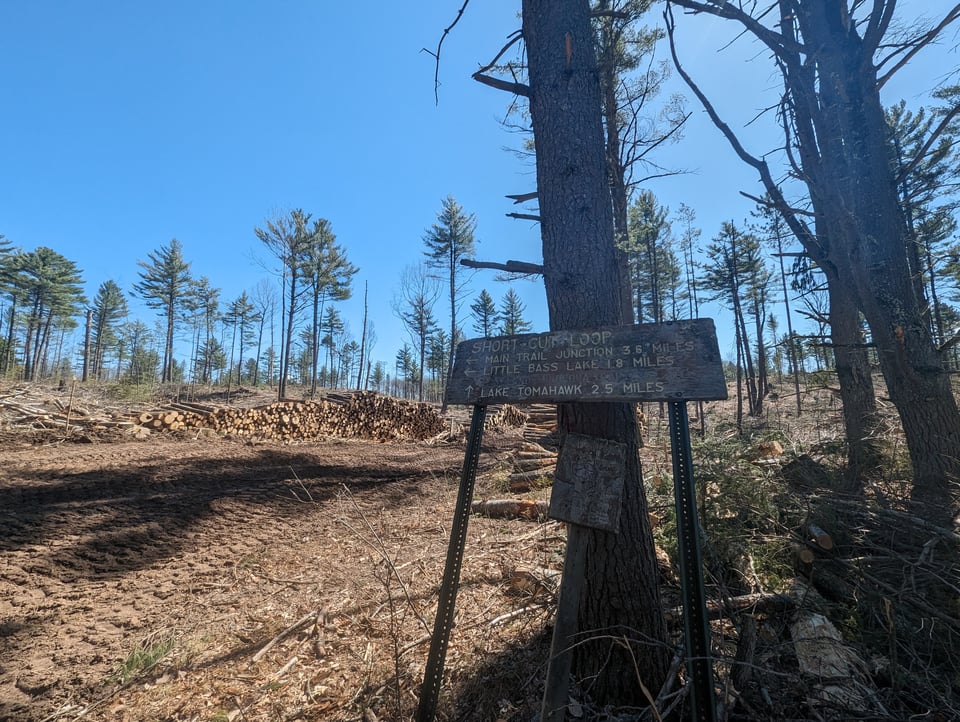
Local volunteer trail clubs, which take care of the snowmobile and ATV routes that bring in tourists, rely on these state matching grants. The money helps clubs buy heavy trail groomers, which can cost over 250,000 dollars, and fixes old bridges.
Trail advocates point out that public land access is a major economic engine for the region. Gary Dominski, President of the Pel-Cho Mudd Nutz ATV/UTV Club, spoke on the record about opening trail routes near Monico.
"I think what you got to look at is really the economic impact that the sport brings," Dominski said. "This is another avenue for local businesses to profit from and bring people to the area."
If trail networks fall apart or if private landowners close access, local business groups warn that a drop in tourism could force counties into an even worse economic crunch.
What Lies Ahead for the Northwoods
Several trail and county park grants are frozen. Land purchase projects, including negotiations for undeveloped land along the Wisconsin River south of Rhinelander, are now stalled. In that case, private landowners who want to provide public canoe access are left without a state funding partner.
Swearingen and Callahan have defended their votes as a necessary defense of local town control. They argue that the state must change its funding rules and increase direct aid to northern towns before more land is locked up in conservation.
Residents of Oneida, Vilas, and Lincoln counties are left to weigh two different economic ideas: one that sees protected forests and public trails as the main engines of the local economy, and another that sees those same protections as a threat to local tax growth and town survival.
You just read issue #99 of Northwoods Ledger. You can also browse the full archives of this newsletter.