
We believe that informed voters are the only defense against fiscal mismanagement and the erosion of local resources. If you are a paid subscriber, thank you for making this investigative work possible.
(Technical Update: Our previous draft stated the owners needed a re-zoning to sell the land for retail use. In fact, the property was already zoned for Community Business, which permits retail. The actual dispute involved a request to upgrade the designation to All-Purpose Commercial, which would have allowed for more intensive industrial uses and increased the property's market value.)
The clearing of timber at the intersection of Highway 51 and Snyder Road has sparked a high-stakes conflict between R&N Real Estate Holdings and Vilas County officials. What began as a local zoning dispute has evolved into a formal law enforcement complaint filed with Sheriff Gerard Ritter. The investigation by The Lakeland Times into missing public records now sits at the center of a looming defamation lawsuit involving a rumored industrial gravel pit.
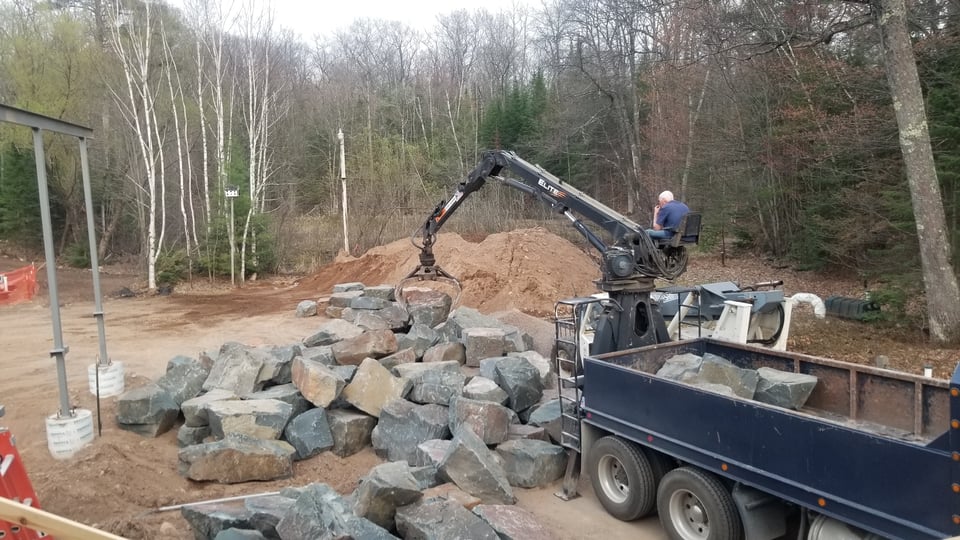
The Arbor Vitae Land Dispute and the Gravel Pit Rumor
The conflict began in the summer of 2025 at a highly visible intersection in the Town of Arbor Vitae. At the corner of U.S. Highway 51 and Snyder Road, the property owners cleared a massive section of timber. The action, taken under their company R&N Real Estate Holdings, triggered an immediate backlash from residential neighbors. While the Trapps sought a broad commercial re-zoning to sell the land for retail use, a specific rumor rapidly poisoned the public process. Neighbors began to believe the site was destined to become a high-volume, industrial gravel pit.
To the residents, a gravel pit meant constant noise, dust, and heavy truck traffic. These fears provided the political leverage needed for the Town of Arbor Vitae to deny the re-zoning request in September 2025. By December, Vilas County escalated the fight by filing a civil lawsuit to force the landowners into regulatory compliance. The county sought a court order to stop all work on the property. Officials argued that the Trapps had cleared the land for commercial use without the necessary permits. At that time, the legal focus remained strictly on whether the landowners had violated existing zoning codes.
The Lakeland Times Investigation into Vilas County Records
On February 13, 2026, The Lakeland Times utilized Wisconsin’s open records law to investigate the origins of the gravel pit rumor. The newspaper maintains a fierce defense of private property rights and suspected that the rumor was not a grassroots concern. Instead, the publisher and the landowners allege that officials fabricated the rumor to devalue the land and block the sale.
On February 27, the Trapps sold the parcel to the Lac du Flambeau Business Development Corporation. Shortly after, they announced their intent to counter-sue Vilas County for defamation and tortious interference. They claim the gravel pit rumor devalued the final sale by millions of dollars. The success of this lawsuit hinges on proving that county officials actively spread a false narrative to stop a development they did not like.
The Missing Emails: Malice or Administrative Error?
Currently, no public evidence proves a government conspiracy. While the investigation has revealed a confirmed procedural failure, the motive remains the subject of intense debate. The Lakeland Times filed identical records requests with the Town of Arbor Vitae and the Vilas County Zoning Department. Because Vilas County uses a decentralized records model, department heads act as their own legal custodians. Operating under this system, Zoning Administrator David Sadenwasser provided a secure download link to the newspaper that omitted critical internal emails. The Town of Arbor Vitae, responding to the exact same request, produced them.
This discrepancy proves the county's records search was incomplete, but it leaves the public with two competing explanations.
The first explanation, held by publisher Gregg Walker and the Trapps, is that the omission was a deliberate cover-up to shield the county from the defamation lawsuit. On April 14, Walker filed a formal law enforcement complaint against Sadenwasser to test this theory. The charge alleges that Sadenwasser intentionally withheld records to hide internal discussions regarding the gravel pit rumor.
The second explanation is more mundane: administrative error. In rural administrations, missing documents are often the result of poor search techniques, different keyword interpretations, or a lack of specialized archiving software. Sadenwasser may have simply failed to find the emails during a manual search. However, because the county allows department heads to manage their own records requests, no neutral party can verify if the error was an accident or an act of malice.
Taxpayer Liability and Wisconsin Open Records Law
Regardless of the motive, the financial stakes for Vilas County residents are high. If the omitted emails, or the internal records Walker is still seeking, confirm that the Zoning Department used inaccurate information to influence the public process, taxpayers carry the ultimate liability. When a public official is accused of misconduct, the residents pay the financial damages.
Wisconsin Statute 19.31 mandates a presumption of complete public access to such files precisely to prevent these gaps in the record. Walker’s complaint forces a test for Vilas County Sheriff Gerard Ritter. A historical parallel exists. In 2024, District Attorney Karl Hayes issued a strict legal ultimatum to the Town of Presque Isle to force the surrender of withheld records. The current investigation will determine if the same standard applies to a county department head.
Proposed Solutions for Vilas County Government Transparency
Prosecuting one official is a reactive measure. True civic solutions require structural reforms to remove the temptation of administrative secrecy.
One potential change is the centralization of records collection. A centralized model routes all records requests through a single statutory office, such as the County Clerk. This removes the self-policing loophole by placing a neutral party in charge of gathering documents from every department.
Another adjustment involves automated archiving technology. Automated email archiving software reduces human error and workload bottlenecks. This technology allows a neutral officer to perform independent keyword searches across all county servers. It eliminates the need for individual officials to manually search their own inboxes.
Finally, standardized legal holds would ensure that all relevant communications are preserved as soon as a property dispute leads to a formal claim. This process creates a reliable digital trail. It protects the county from allegations of records destruction and provides clear evidence for the public.
Transparency cannot rely on the vigilance of a newspaper or the threat of a sheriff's investigation. The county must build accountability directly into its digital infrastructure to protect the taxpayers from the cost of administrative silence.
You just read issue #84 of Northwoods Ledger. You can also browse the full archives of this newsletter.