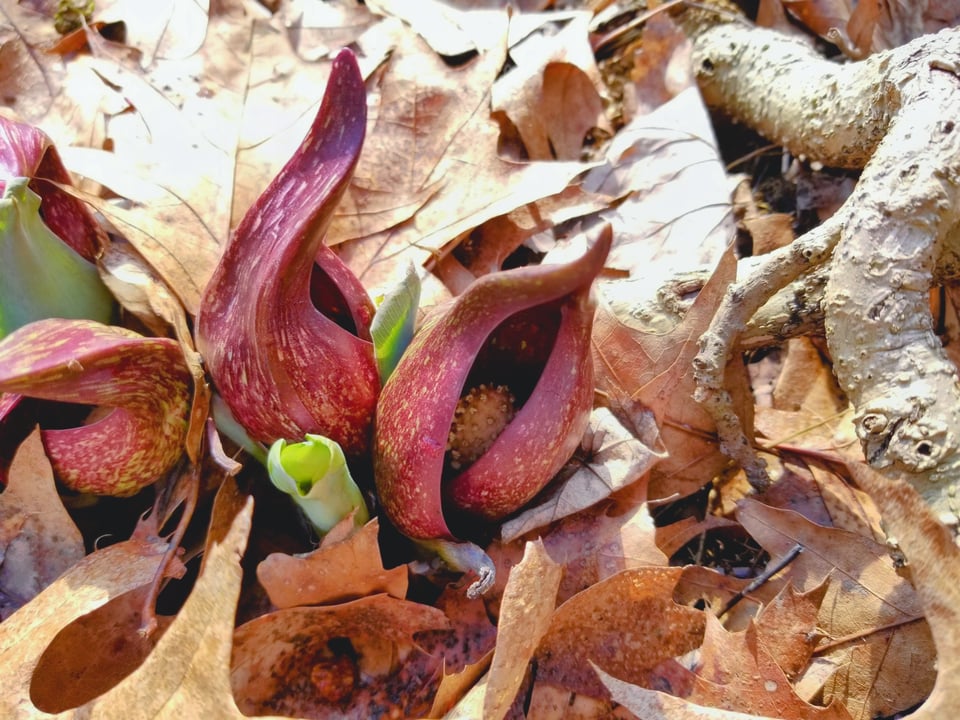
Northwoods is still locked in a deep freeze, one local resident is already hard at work. The Eastern Skunk Cabbage is the first sign of life in the spring, but it does not look or act like a typical flower. Instead of waiting for the sun, it uses its own internal heater to melt through the frozen ground. It is a biological anomaly that essentially cheats winter to get a head start on the season.
The Impossible Furnace
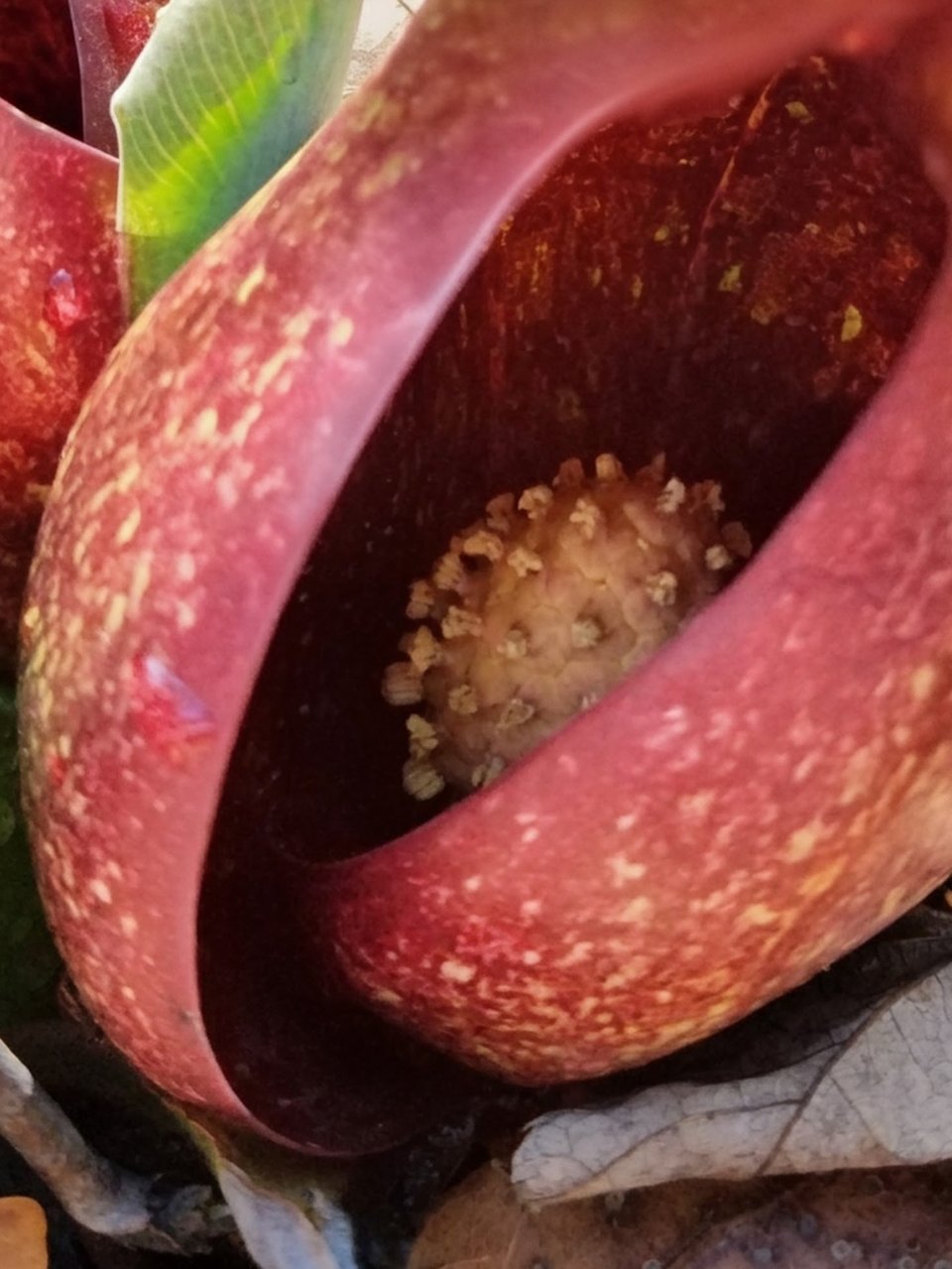
That purple, egg shaped hood you see in the muck is actually a heater. Through a process called thermogenesis, the plant burns up its stored energy to stay warm. Even when the air is below freezing, the inside of that hood can be 59°F to 95°F. That is enough heat to melt a perfect circle in the snow around itself.
The Chemical Catfish
This plant does not smell like a rose because it is not looking for bees. It smells like rotting meat to attract flies and beetles that are active early in the year. By mimicking a thawed out carcass, it catfishes these insects into entering its warm hood for shelter. While they are inside warming up, they move the pollen around and help the plant reproduce.
The plant’s warmth even creates its own mini ecosystem. Opportunistic spiders often spin webs across the opening of the hood. They are not there for the plant. They are there because the plant acts as a heated drive thru for insects, delivering a steady stream of gnats and flies directly into the spiders' webs.
The Living Fossil
The skunk cabbage is an evolutionary holdover. It belongs to an ancient lineage that has existed in nearly its current form since the Cretaceous Period, over 65 million years ago. While other plants evolved more delicate ways to reproduce, the skunk cabbage stuck with its primal, heat based mechanics. It is a literal piece of prehistoric Northwoods history that survived the extinction of the dinosaurs.
The Anchored Resident
You cannot easily move this plant. It has massive, cord like roots that actually pull the plant deeper into the mud every year. This keeps the growing parts safely below the frost line. Because of this indestructible root system, a single plant can be older than the trees surrounding it. In stable wetlands, these plants can reach ages of 1,000 years, making them some of the oldest living things in the region.
The Landowner's Sign
If you find this on your property, you have found a living fossil. It thrives in mucky, spring fed soil where the water table is high. It is a critical part of the local ecosystem. Long before modern drugstores, the skunk cabbage was even a staple in the local healer's toolkit to treat respiratory issues and headaches. Today, it remains one of the very first food sources for black bears when they finally leave their dens.
You just read issue #61 of Northwoods Ledger. You can also browse the full archives of this newsletter.