
As shrinking volunteer pools force communities to hire full-time paramedics, rigid state tax laws make paying for them, a legal mine field. The town of Presque Isle stepped on one of those mines.

The Legal Ceiling
Wisconsin caps municipal budgets using a strict rule under Wis. Stat. § 66.0602. The state blocks towns from freely raising property taxes, tying any budget increase directly to physical growth. A town can only raise its total tax collection by the exact percentage of new buildings constructed within its borders that year.
This rule is devastating for the Northwoods. Other states give local governments automatic inflation cushions of two or three percent just to cover rising costs. Wisconsin removes that safety net entirely. By locking municipal revenue growth strictly to physical new construction, state law treats every community as if it is a booming, expanding suburb. If a rural town cannot physically expand its footprint, the state legally forces its operational budget to remain frozen in time, regardless of how much it costs to keep the lights on or pay a paramedic.
In slow-growth areas like northwestern Vilas County, new construction frequently sits near zero. To fund their share of the newly formed district, town leaders knew their frozen budgets could not cover the massive costs. To pay their assessments, the towns planned to bypass the state limit using a process called a levy limit override.
The Presque Isle Levy Override
During a special elector meeting on November 26, 2024, Presque Isle residents voted to tax themselves, approving a $377,000 levy override by a tally of 53 to 14.
By January 2025, however, a Wisconsin Department of Revenue (WDOR) auditor declared the entire tax increase illegal due to critical administrative errors on the town's paperwork.
In January 2025, a Wisconsin Department of Revenue (WDOR) auditor reviewed the town's paperwork. The auditor declared the entire tax increase illegal due to a series of critical administrative errors.
The Bureaucratic Trap
State law lays out a strict process for local overrides. To legally exceed the tax limit, a town board must first pass a formal resolution supporting the increase, publish a public notice, and then have residents cast two separate votes at a town meeting. One to endorse the board's resolution, and a second to approve the final town tax levy.
The state publishes annual, step-by-step instructions detailing this exact process, yet local leaders across Wisconsin routinely trip over the paperwork. If a single step is missed or completed out of order, the state must reject the entire tax levy.
Presque Isle officials failed on all fronts. The town board did not pass the preliminary resolution before publishing the public notice, failed to explicitly put the override on the meeting agenda, and had residents vote once on the total budget instead of holding the required separate votes.
(We believe that informed voters are the only defense against fiscal mismanagement and the erosion of local resources. If you are a paid subscriber, thank you for making this work possible.)
Local Oversight and Leadership Turnover
Under state law, town clerks are legally responsible for ensuring municipal procedures comply with state statutes. Rather than following the state's step-by-step instructions to prevent such errors, local leadership proceeded out of order.
Town Board Chairman John MacLean and Town Clerk Kimberly Prott oversaw the invalidated November 2024 override procedures. Both officials exited their municipal roles the following year. In the April 2025 elections, challenger Allen Eschenbauch defeated incumbent MacLean for the Town Board Chairperson seat (275 to 249). A few months later, in September 2025, Prott officially resigned as Town Clerk, and the board appointed Lori Thomas to the position.
The State Ransom
The WDOR gave the Presque Isle Town Board a brutal choice: accept a mandatory, dollar-for-dollar reduction in the town's state shared revenue until the overage was recouped, or reissue modified tax bills and refund the money directly to taxpayers.
The town board chose the refund. They returned $377,191 to local taxpayers, which included minor processing adjustments. While this satisfied the state audit, it forced the town's tax levy back to its 2023 baseline and left their financial commitment to the EMS district completely empty. To cover daily operations, town officials had to drain cash reserves and delay planned road repairs and infrastructure projects.
The Human Cost
When someone dials 911 in Vilas County, they don’t care about net new construction percentages, state tax limits, or municipal resolutions. They just need an ambulance.
A leadership shakeup does not solve the underlying math problem. The state tax cap remains strictly in place, and rural towns still lack the baseline revenue to fund full-time paramedics.
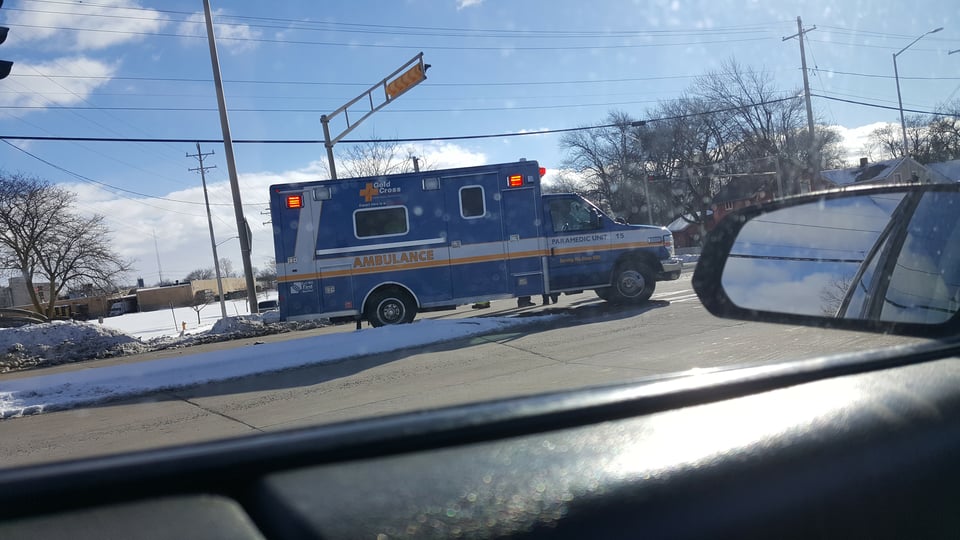
As long as Wisconsin forces slow growth communities to navigate a bureaucratic maze just to keep an ambulance on the road, local emergency services will remain just one administrative misstep away from financial collapse.
You just read issue #97 of Northwoods Ledger. You can also browse the full archives of this newsletter.