
The Oneida County Planning and Development Committee finalized draft language for Ordinance Amendment 13-2025 on April 29, 2026. The measure permanently extends standard county zoning permits from 24 to 36 months. It also arms the county with aggressive new enforcement tools. The policy shift stems directly from a contentious residential development at 8168 Lark Road in Lake Tomahawk.
The full Board of Supervisors have not yet cast a final vote. The next scheduled meeting is June 16, 2026, marking the earliest opportunity for a final vote. This gives residents a critical window to submit public comments before the rules become law.
The Lark Road Catalyst
Michael and Nicole Gerdin purchased a closed shoreline resort to build a massive residential lodge. Adjacent landowners objected immediately. Bruce Forsberg warned the town board that the proposed footprint would double county impervious surface limits and cause severe runoff. The proposed peak height reached 49 feet and six inches, exceeding the 35-foot county limit.
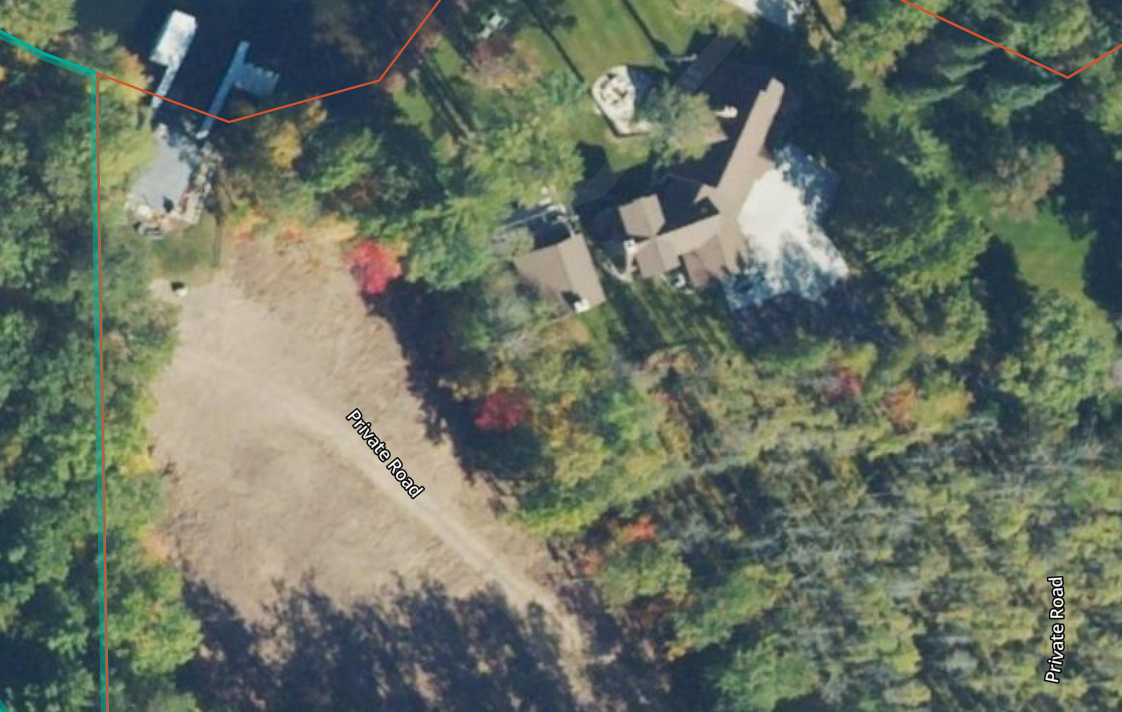
The Lake Tomahawk Town Board formally recommended denial of the Conditional Use Permit on March 13, 2024.
Bypassing Local Objections
The town board objection failed. Wisconsin law grants unzoned townships only advisory power. The developers used legal maneuvers and capital to bypass local constraints.
Lot Line Adjustment: The developers resolved environmental constraints by legally combining two adjacent shoreland parcels. This lot-line adjustment expanded their total lot acreage, lowering the proportion of impervious surfaces. Since this fell below the maximum county threshold, the zoning department required no stormwater engineering, native plant retention zones, or rain gardens.
County Override: The Oneida County Planning and Development Committee exercised its final jurisdiction and approved the height variance on July 10, 2024. The committee justified ignoring the Lake Tomahawk Town Board because the developer's lot-line adjustment brought the project into compliance with the county zoning code. Committee members noted that the county possessed no legal grounds to deny a compliant application. Denying a permit that meets all statutory limits would expose the county to lawsuits.
Infrastructure Conditions: Thin rural asphalt lacks the deep gravel base layers required to support industrial weight limits. To address the threat of heavy concrete trucks and excavators, the committee forced the developer to post a $50,000 financial guarantee bond to cover physical road damage. However, modern asphalt and sub-grade reconstruction costs regularly exceed $150,000 per mile, leaving local taxpayers to carry the remaining financial risk.
The 36-Month Standard
The Lark Road project required a multi-year build schedule. Zoning Director Karl Jennrich recognized the existing 24-month permit window failed to align with Northwoods construction realities. Deep frost lines and short summer seasons halt heavy earth-moving operations for five months of the year.
Rather than process individual variances for massive corporate builds, the county drafted Ordinance 13-2025 to establish a permanent 36-month baseline for all zoning permits. Builders must now complete the foundation and outside shell before the three-year window expires.
The Legislative Compromise: Strict New Enforcement
Ordinance 13-2025 also gives the zoning department aggressive new compliance tools. This pairs timeline relief with strict enforcement measures to ensure property owners do not abuse the extended window.
The Physical Violation Freeze (Section 9.82): The county instituted a digital permit freeze for properties holding active physical zoning violations. The county will deny new permits until the owner tears down or rectifies the illegal build.
The Citation Exemption: Section 9.82(C)(2) explicitly states the permit freeze does not apply to judgments resulting from citations. The county cannot freeze a property over an unpaid fine.
The 365-Day Penalty: If the county revokes an active permit due to deliberate violations, the property owner cannot reapply for a full calendar year.
Tactical Guide for Unincorporated Townships -
The Oneida County Planning and Development Committee issued the final Conditional Use Permit for the Lark Road development on July 10, 2024. The county closed the public comment period for that specific parcel prior to that vote. Residents can only submit testimony regarding the pending legislative rules (Ordinance Amendment 13-2025).
Bypass the Town Board: Wisconsin law grants unzoned townships zero zoning authority. The real control lies with the Oneida County Planning and Development Committee.
Utilize the Permit Freeze: Residents should email violations to the county zoning department technicians. Upon verification of a physical violation, the county will block the owner from securing future permits on that parcel until they resolve the original issue.
Submit Written Testimony: You can submit written comments by physical mail or email. Mail letters to the Oneida County Planning and Zoning Department, PO Box 400, Rhinelander, WI 54501. Alternatively, email your comments to zoning@co.oneida.wi.us.
Your email must include your full name, your physical home address, and a specific statement declaring your residency or tax status (for example: "I am an Oneida County taxpayer residing in Lake Tomahawk" or "I own property in the Town of Stella"). You must also place the project's permit number, rezone petition number, or meeting agenda title in the subject line of your email.
The department enforces two strict deadlines for these submissions:
For regular agenda items: The department must receive your email or letter at least two hours before the scheduled meeting.
For formal public hearings (such as rezones or ordinance amendments): The department must receive your written comments by 10:00 a.m. on the Monday prior to the scheduled Wednesday meeting. The committee excludes any correspondence arriving after these respective deadlines from the official meeting packet.
Deliver Spoken Comments: Public hearings take place in the County Board Room on the second floor of the Oneida County Courthouse. You must be physically present to speak. Arrive early to fill out a public comment registration card at the entrance door. You must list your name, home address, and the specific agenda item you wish to address. The committee chairman will call registered speakers during the public hearing portion of the agenda. Speak directly into the podium microphone and state your name and address for the record before delivering your testimony. The committee limits all public speakers to a maximum of three minutes.
(We believe that informed voters are the only defense against fiscal mismanagement and the erosion of local resources. If you are a paid subscriber, thank you for making this work possible.)
You just read issue #95 of Northwoods Ledger. You can also browse the full archives of this newsletter.