Firefly Magic: The Science and Struggle of the Northwoods' Favorite Insect

Deep beneath the Oneida County snowpack, sitting dormant in the frozen leaf litter, next summer's light show is waiting.
While the flashing "lightning bugs" of July feel like a distant memory right now, the insect itself is present year-round. The lifecycle of the Lampyridae family is a complex journey that transforms a voracious, armored ground hunter into the winged bioluminescent beetle that defines Northwoods summer evenings.
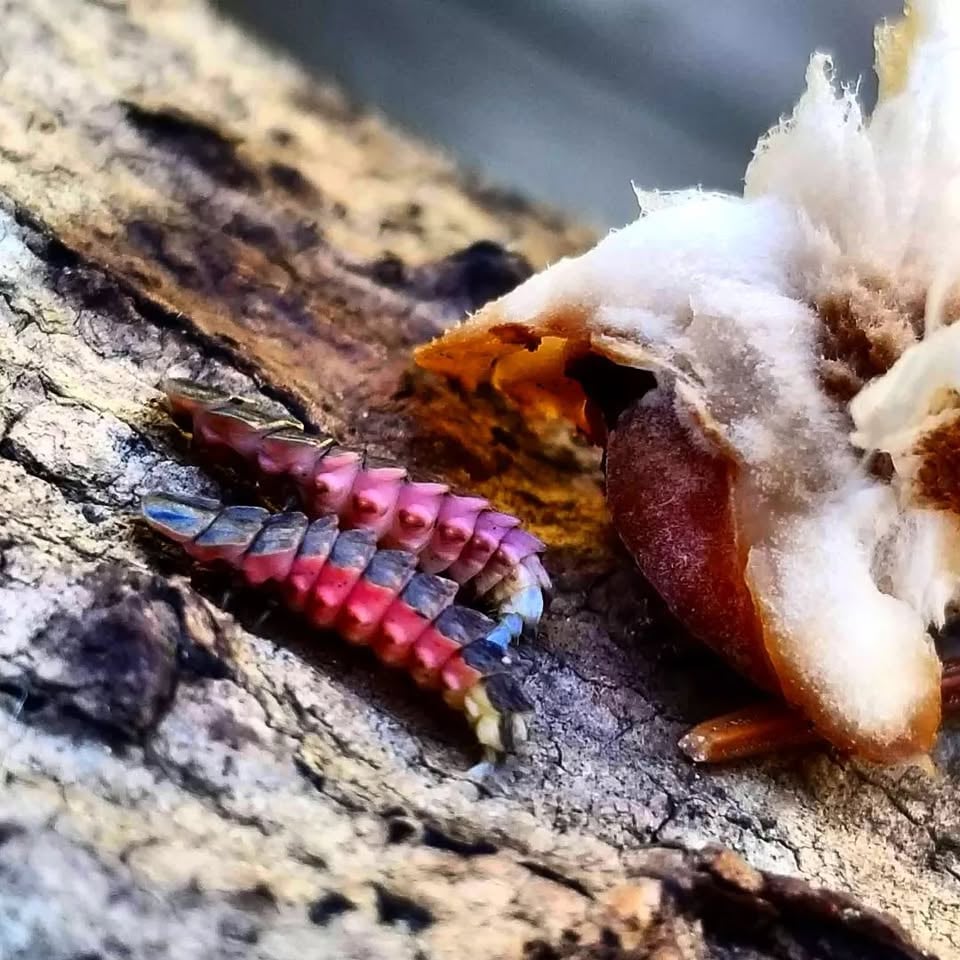
The Hunter Under the Snow
Before they take flight, fireflies spend up to two years in a larval stage. These are not the soft-bodied insects you catch in a jar. These larvae, often called "glowworms," are rugged, segmented predators built for hunting in the soil.
They look like prehistoric armored plates, often with distinct pink and black coloration. Right now, they are overwintering under bark or in the soil. When the spring thaw arrives, they become active. They use powerful jaws to inject paralyzing enzymes into snails, slugs, and earthworms. They are a gardener's best friend because they keep populations of these slimy pests in check.
Even at this stage, they possess a faint, steady glow. Biologists believe this is a form of aposematism. While many animals use camouflage to hide, aposematic creatures do the opposite. They make themselves as obvious as possible to ensure they are not mistaken for a safe meal. It is a warning signal to nocturnal predators like toads or shrews that the larva tastes bad or is toxic.
The Chemistry of "Cold Light"
The most defining feature of the firefly is its ability to produce light. This process is known as bioluminescence. It is not magic; it is highly efficient organic chemistry.
The glow comes from a reaction inside dedicated light organs in the insect's abdomen. The process requires three main components:
Luciferin: The chemical fuel that produces the light.
Luciferase: An enzyme that acts as the catalyst to spark the reaction.
Oxygen: The trigger that controls the flashing.
When a firefly adds oxygen to the mix, the reaction occurs, and light is emitted. Unlike a lightbulb, which wastes 90% of its energy as heat, a firefly's "cold light" is nearly 100% efficient. In adults, this flashing is a complex language. Each species has a unique flash pattern and color used to identify and locate potential mates in the dark forest understory.
Stewardship for a Brighter Summer
Firefly populations are declining globally due to habitat loss, light pollution, and pesticide use. The Northwoods remains a stronghold because we still have the necessary habitat, such as moist woodlands, wetlands, and untreated edges.
To ensure these insects survive their long larval stage on your property, consider these steps:
Leave the Leaves: The leaf litter is the primary nursery and hunting ground for larvae. Over-raking destroys their habitat.
Turn Off Exterior Lights: Artificial light interferes with the adult mating flashes. This makes it harder for them to reproduce.
Avoid Broad-Spectrum Pesticides: Chemicals designed to kill garden pests will also kill beneficial predators like firefly larvae.
You just read issue #40 of Northwoods Ledger. You can also browse the full archives of this newsletter.