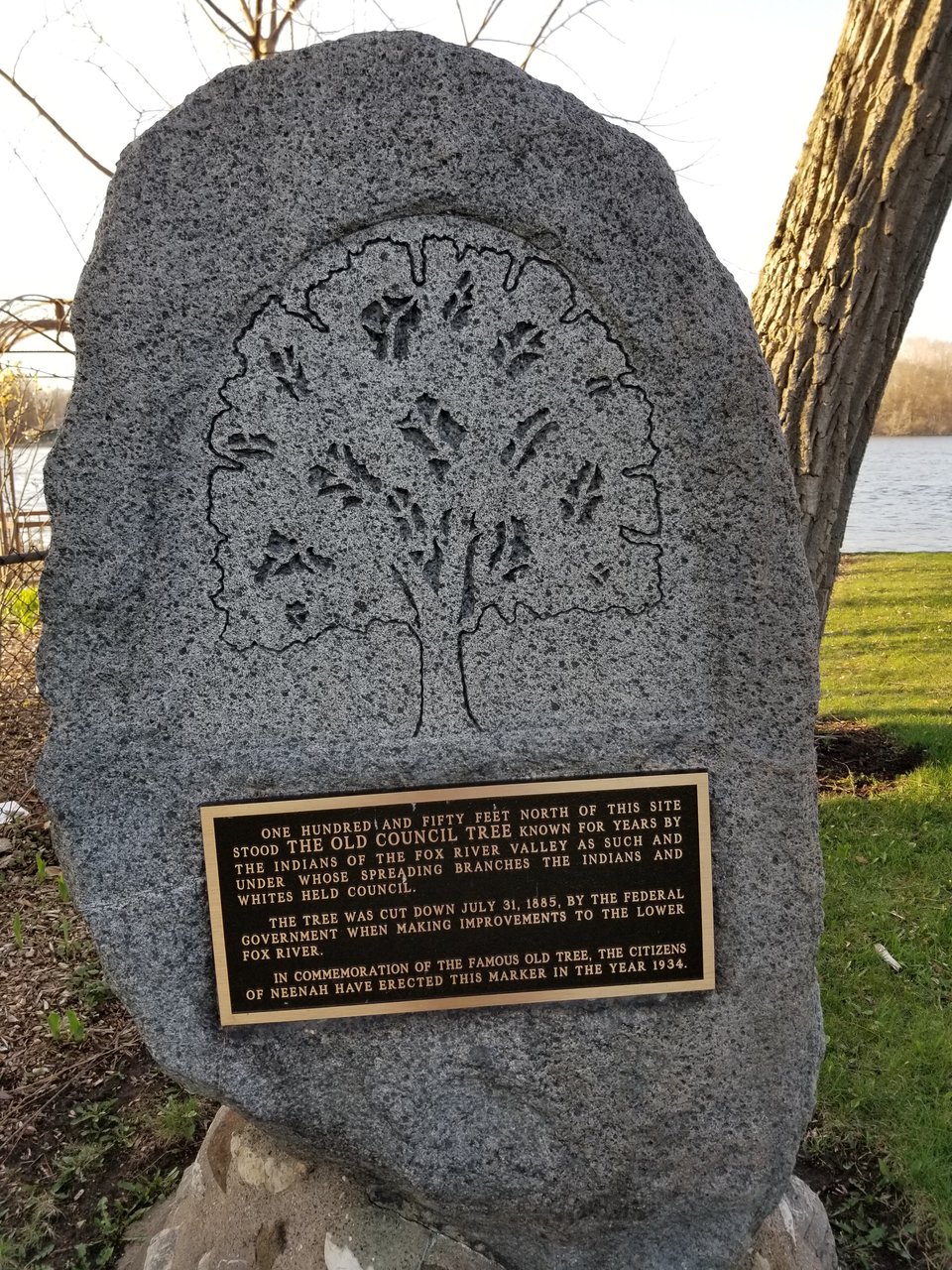
To the early inhabitants of the Fox River Valley, it was the "Old Council Tree," a massive elm that served as the primary landmark for diplomacy, trade, and communal gathering for centuries.
THE SENTINEL OF THE WATERWAY
Long before it was a "historic relic," the Old Council Tree was a functional and spiritual anchor for the region. Standing at the mouth of the Neenah-Fox River, its immense size made it a natural lighthouse, used as a primary navigational guide for indigenous boatmen and, eventually, early steamer pilots on Lake Winnebago.
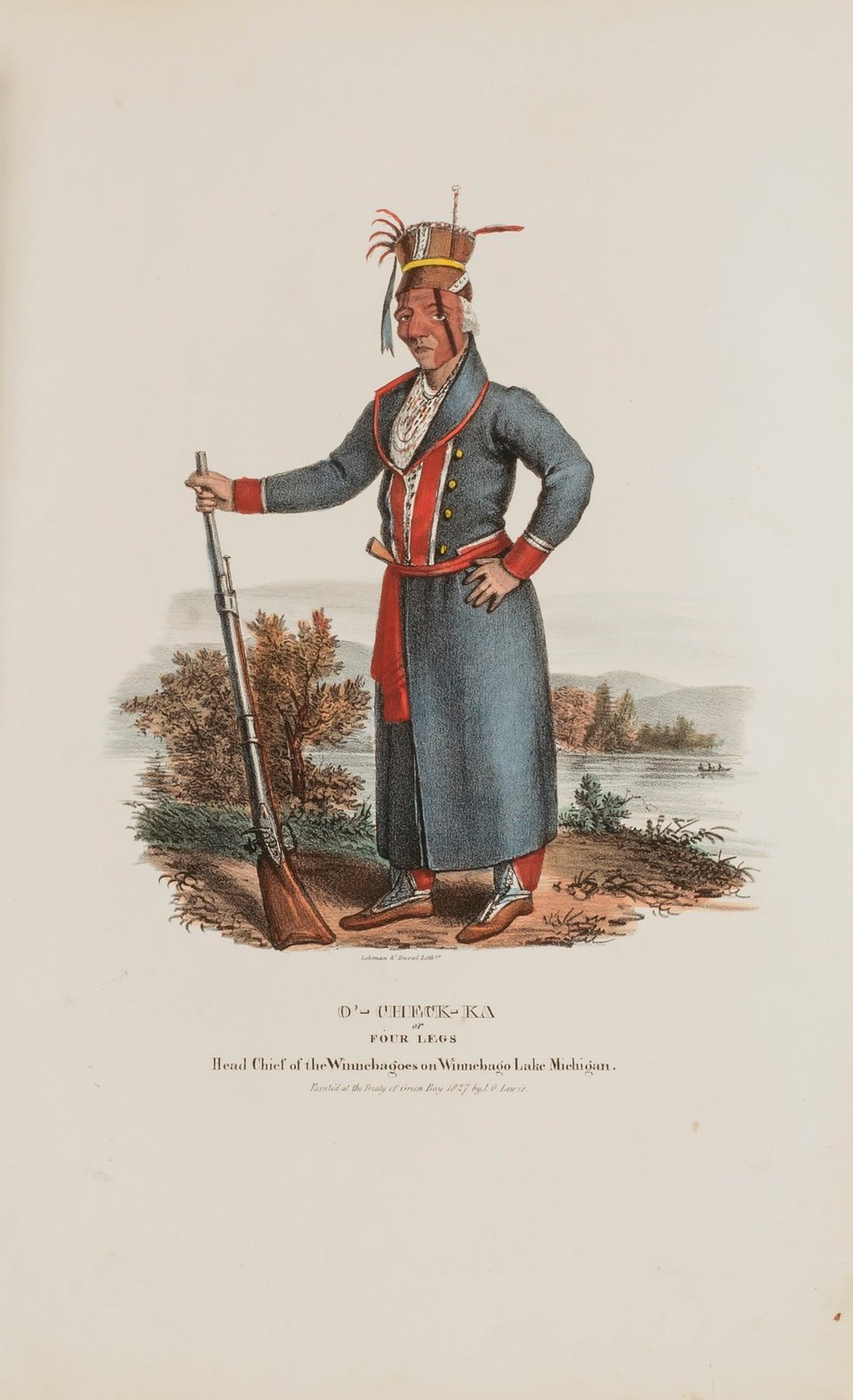
Beneath its branches, the Ho-Chunk (Winnebago) and Menominee leaders held sovereignty. Most famously, in 1815, Ho-Chunk Chief Four Legs used the site as a strategic checkpoint, halting travelers to exact tribute as they entered the Fox River. Chief Four Legs was not merely a tribal elder; he was a sophisticated geopolitical strategist. By positioning his village at the rapids, he controlled the bottleneck through which all river traffic had to pass.
The Tribute System: He established a "toll" system where he halted traveling boatmen and traders to exact tribute for passage through Ho-Chunk territory.
The 1815 Blockade: In a bold display of sovereignty, he famously blocked the river in 1815, using the Old Council Tree as his command post to signal that the lake and its resources belonged exclusively to his people.
The Confrontation of 1819
The most defining moment of his leadership recorded in Western history was his 1819 encounter with Colonel Henry Leavenworth.
The Stand: As Leavenworth’s expedition approached the rapids, Four Legs signaled them to stop, famously declaring that the "lake was locked" and he held the key.
The Shift in Power: Leavenworth responded by raising his rifle and stating, "THIS IS THE KEY, and I shall unlock it and go on". This exchange effectively signaled the beginning of the end for indigenous control over the Fox River as a sovereign trade route, marking the transition to federal military and industrial oversight.
End of an Era: While Four Legs continued to live on Doty Island for another decade, the era of taxing federal or military movement was over.
It feels like a scene from a Western, but the record is anchored in the journals of James Duane Doty, who was physically present for the exchange.
THE COST OF "IMPROVEMENTS"
The end of the Council Tree came not from rot, but from the push of federal construction on the Lower Fox River. While earlier private efforts had failed, the federal government took over the entire river system in 1872.
By the 1880s, the U.S. Army Corps of Engineers was committed to building a slack water system—a series of navigable "steps" to transform a river that dropped 168 feet in 39 miles into an industrial highway. The Old Council Tree stood at a critical bottleneck where the river exits Lake Winnebago. To allow commercial steamboats and barges to pass through the Neenah channel, the Corps determined the river had to be widened and dredged. On July 31, 1885, the tree was felled because it sat directly in the path of this new, deeper channel.
THE CITIZEN DRIVE: ALICE STUART AND THE NEENAH RECLAMATION
The commemoration of the tree in 1934 was part of a broader civic movement to reclaim the Neenah shoreline, spearheaded largely by Alice Stuart. A prominent local philanthropist and a driving force behind the Neenah Park Board, Alice Stuart was instrumental in transforming the riverbank from an industrial site back into a public commons.
In 1931, under her influence and that of the city council, Neenah constructed a concrete retaining wall that reclaimed over two acres of land from the Fox River, creating what is now Kimberly Point Park. Stuart recognized that the advances of the 1880s had stripped the community of its history. It was her leadership that ensured the landmark was memorialized, seeing to the placement of the granite marker and the planting of a direct descendant of the tree at the lighthouse site to restore the community's living link to its past.
A LEGACY IN STONE, WOOD, AND LEAF
Though the tree was sacrificed, it was not entirely erased from the landscape:
The 1934 Marker: A granite monument featuring a stylized engraving of the elm serves as a permanent shadow of the shade it once offered.
The Living Shoot: Thanks to the foresight of Alice Stuart, a shoot from the original tree was preserved; a sturdy descendant of the Council Tree continues to grow today at Kimberly Point.
The Doty Table: A large slab of the original wood was fashioned into a table top that remains in Governor Doty’s log cabin in Neenah.
You just read issue #51 of Northwoods Ledger. You can also browse the full archives of this newsletter.